

 English
  Español
 The SMK-24F Full-Cube Undercounter Ice Maker is a fully automated ice-making unit meticulously desig...
+ VIEW MORE
 Industry News
HOME / News & Share / Industry News / How Do You Make Clear Ice Cubes? Science, Methods and Bar-Quality Results
How Do You Make Clear Ice Cubes? Science, Methods and Bar-Quality Results
Sharmoon appreciates your support and sincerely looks forward to cooperating with you for mutual development!
Content
Pull a tray of ice from a -18 °C freezer and it almost always has a white core. The water was fine; the freezing direction was not. Bars that serve crystal-clear two-inch cubes are working with the same municipal water you have at home — they simply let the block freeze from one side instead of six.
The short answer: clear ice comes from directional freezing, not from a special type of water. Freeze a block from the top down and the dissolved air and minerals are pushed into the last portion to freeze, which you cut away. Freeze a tray from every side at once and that same gas is trapped in the middle for good.
Below: what actually happens inside the ice, the home method that works with a small cooler, how the numbers compare, and how commercial spray machines reach the same result at 20 to 90 kg a day.
Why Ice Goes Cloudy
Water in equilibrium with air carries roughly 20 mg/L of dissolved gases, mostly nitrogen and oxygen, plus calcium and magnesium salts. Ice is a crystal lattice — it accepts water molecules, not gas bubbles or mineral grains. As the freezing front advances, it pushes those impurities ahead of it. Move the front slowly in one direction and everything concentrates in the last 20–30% of the block, the part you discard. Close the front in from every side and the final water to freeze sits in the centre, carrying all of it. That is the white core.
Two variables decide how much of that cloud reaches the glass:
- Freezing speed. A thin tray or a blast freezer drives a fast front that traps gas before it can diffuse away. A slow front gives dissolved air time to migrate into the still-liquid water.
- Dissolved content. Hard water carries more mineral load, so there is more material to push. Filtration helps at the margin; it never overrides freezing geometry.
What Water Choice Actually Changes
- Distilled water removes minerals but stays saturated with dissolved oxygen once it has been exposed to air. In a tray it thins the cloud; it does not clear it.
- Boiled or twice-boiled water releases dissolved gas. Clarity improves visibly, and the core still forms.
- Water near 40 °C holds less dissolved gas and starts freezing more slowly. This is the cheapest change worth making.
Roughly 20% of clarity comes from water quality and 80% from freezing direction. Switching to distilled water while still using a tray is the most common dead end.
The Directional Freezing Method, Step by Step
The setup is an insulated box with the lid off: cold enters through the open top while the sides and floor insulate. A 1.5 L cooler or a foam-lined bread pan works. Budget 20 to 24 hours and expect 60–70% of the block to come out clear.
- Pick the vessel. A rigid box about 12–15 cm deep and 10–12 cm wide; rigid walls keep the cube faces square.
- Prepare the water. Boil 1 L of tap water, cool it to roughly 40 °C, pour it in and leave 2 cm of headroom — water expands about 9% and a brim-full container cracks.
- Insulate the sides and floor. Wrap the container in a folded towel or foam. If the outer walls feel cold after an hour, add a layer.
- Freeze slowly and leave it alone. Set the freezer to -18 °C for 20–24 hours; opening the door breaks the front and leaves bubble streaks.
- Stop before the centre freezes. The block is ready when the front has travelled about 70% of the depth — a skewer should pass through ice, then meet slush.
- Temper before cutting. Five to ten minutes on the counter; ice straight from the freezer shatters, while ice near -5 °C cuts cleanly.
- Cut and discard. Score a 5 cm grid with a serrated knife, tap along the lines with a mallet, and slice off the cloudy bottom slab.
- Store sealed. An airtight container in the freezer; ice surfaces pick up odours from fish or vegetables within days.
If you need only two cubes per drink, a purpose-made directional freezing mold does the same job in less space and the same 18–24 hours. The cooler method wins when you want ten or more uniform cubes. We keep a longer walk-through of the technique, including tray variations and timing, in our notes on directional freezing for clear ice cubes.
Comparing Clear Ice Methods
Figures assume a household freezer at -18 °C and 1–2 L of starting water. Clear yield means the portion that is genuinely transparent, not merely less hazy.
| Method | Freeze time | Clarity | Output | Typical use |
|---|---|---|---|---|
| Ice cube tray, cold tap water | 3–4 hours | White core in every cube | 12–16 cubes | Everyday chilling |
| Ice cube tray, boiled water | 4–6 hours | Thin cloud, not transparent | 12–16 cubes | Low-effort home drinks |
| Directional block in a cooler | 20–24 hours | Clear top 60–70% | 10–14 cubes of 5 cm | Cocktails and spirits |
| Directional freezing mold | 18–24 hours | Clear, small batch | 4–6 large cubes | Small home bar |
| Spray-type cube machine | 12–20 min per cycle | Clear and uniform | 20–90 kg per 24 h | Bars, restaurants, hotels |
| Nugget or flake machine | Continuous | Opaque by design | 30–200 kg per 24 h | Rapid chilling and display |
How Commercial Machines Get Clear Cubes Every Cycle
Freezing one block every 24 hours does not scale. A commercial cube ice machine uses a spray evaporator: a pump lifts water from the sump and sprays it through nozzles onto a refrigerated plate held at roughly -10 to -18 °C. Only part of the water freezes on each pass; the rest runs back down, carrying dissolved solids and heat with it. Because every layer is thin, the freezing front never has to trap gas.
When the slab reaches target thickness, a hot-gas defrost warms the plate for 30–60 seconds; the slab drops onto a grid of wires and breaks into uniform cubes. Cycles of 12–20 minutes are normal, which is how a machine rated at 40 kg per day covers a bar that burns 30 kg on a Friday night.
Where cube clarity matters more than tonnage, a spray crystal machine builds ice in very thin layers — the closest machine equivalent to the cooler sitting on your kitchen counter.
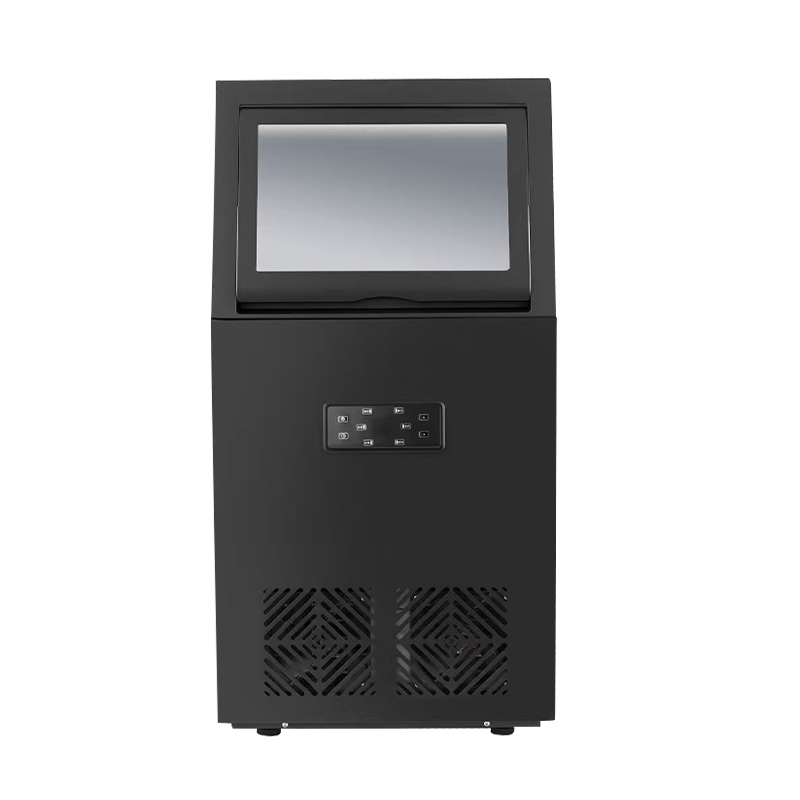 SMK-24P Spray Crystal Ice Maker for Clear IceFor settings where clarity matters more than output, this spray crystal machine produces clear, high-density ice suitable for whiskey, cocktails, iced coffee, and tea.View Product →
Where the cube also has to hold its shape — straight faces, sits flat in the glass, stacks in the bin without fusing — a spray cubic model keeps shape and clarity together.
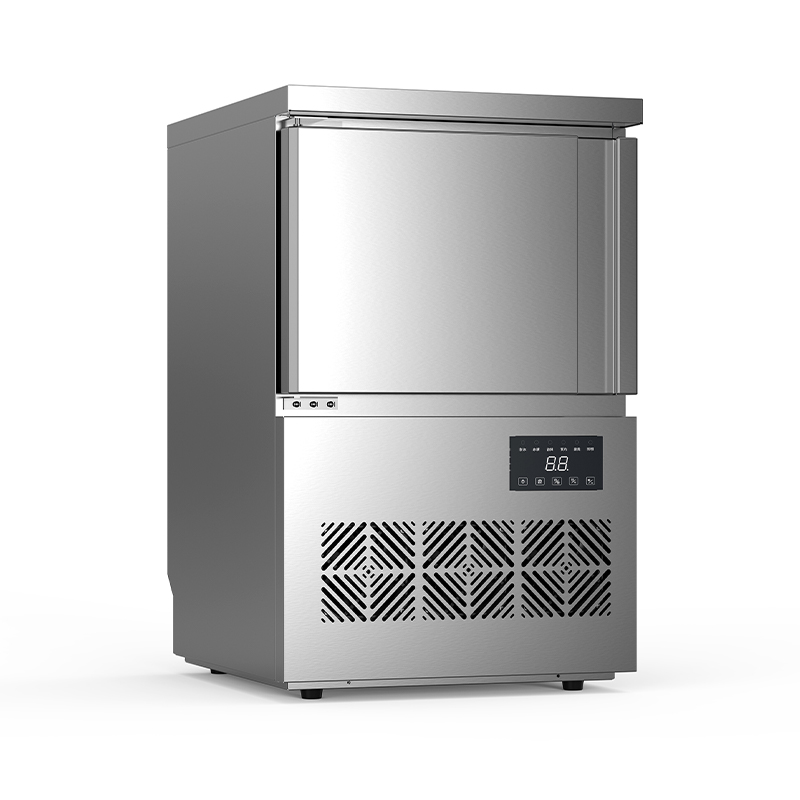 SMK-35P Spray Cubic Commercial Ice MachineFor sites needing shaped, clear cubes, this spray cubic machine offers adjustable thickness and multiple daily outputs from 15 kg to over 100 kg.View Product →
Capacity is usually the variable that changes, not the ice quality itself. Modular units suit a site that starts at 60 kg a day and grows: add a second module and a larger bin later instead of replacing the machine.
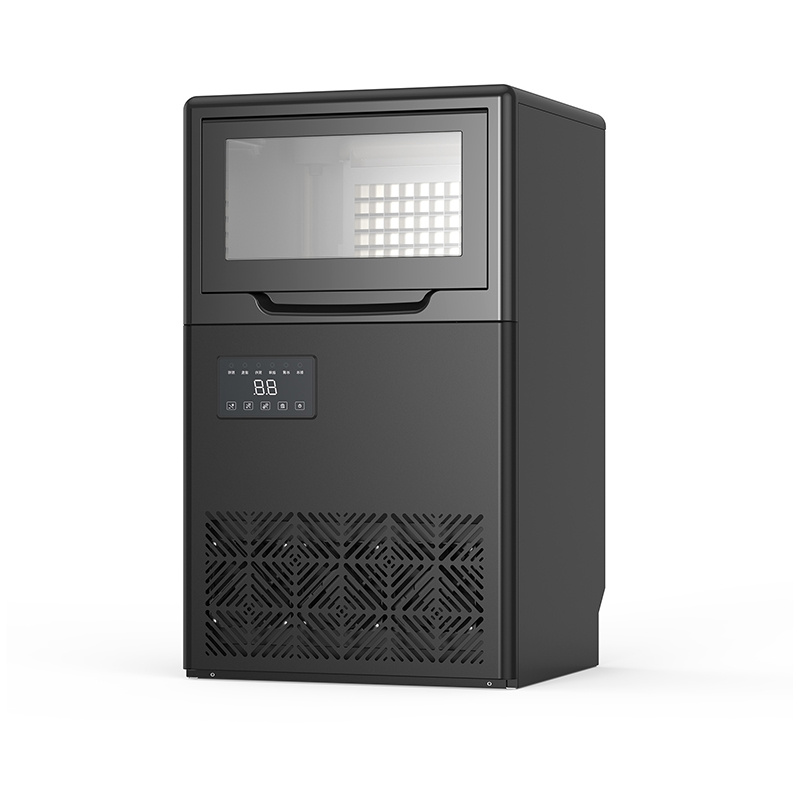 SMK-78F Modular Cube Ice Maker with Integrated StorageFor clear ice at volume, this modular cube maker delivers up to 78 kg/day, combines storage and condensing, and can expand with modules.View Product →
Mistakes That Keep Ice Cloudy
- Changing the water first. Moving to bottled or distilled water while still using a tray changes the thickness of the cloud, never removes it.
- Freezing faster to save time. A colder shelf or a metal tray speeds the front and traps more gas. Slow is the point.
- Insulating only the bottom. Any cold path on the sides starts a second front, and bubbles collect along the seam where the two meet.
- Overfilling the container. Expansion has to go somewhere; it goes into cracks through the block.
- Cutting cold ice. Tempering for five to ten minutes turns shards into clean cubes.
- Storing cubes in an open tray. Freezer odours transfer within days.
- Ignoring scale on a machine. A scaled evaporator lengthens cycles and dulls clarity. Descale on schedule and change the inlet filter.
What to Check Before You Buy or Specify an Ice Machine
If the goal is clear ice at volume, the decision comes down to a handful of numbers and two service questions.
The Numbers That Matter
- Cube size. A 5 cm cube melts slowly and dilutes a drink less; 2.5 cm cubes chill faster but water it down sooner. Ask for actual dimensions, not just "large cube".
- Daily output versus bin capacity. Output is rated over 24 hours at a stated air and water temperature, often 25 °C air and 15 °C water. A 40 kg machine with a 15 kg bin cannot serve a peak hour that consumes 15 kg unless it refills overnight.
- Evaporator type. Spray and plate systems make clear, defined cubes; extruded nugget and flake systems make soft or opaque ice by design. Choose by how the ice is used.
- Water supply and clearance. A 0.5-micron carbon filter upstream protects clarity and taste and cuts descaling frequency, and an air-cooled cabinet needs 5–10 cm of airflow space at the rear and sides.
Two Service Questions
- How accessible is the evaporator for descaling, and what interval does the manufacturer recommend?
- Are cube grids, nozzles and spares available in your market, and does the supplier support OEM/ODM changes such as cube size, bin size or cabinet finish?
Send your target capacity, cube size, water conditions and destination market through our contact page, and the specification can be matched to a model instead of guessed from a catalogue photo.
Clear ice is a freezing-direction problem with a water-quality footnote. At home that means a 1.5 L cooler, water boiled and cooled to about 40 °C, insulation on every side except the top, and 20 to 24 hours in a -18 °C freezer — then cutting the cloudy third away. At scale it means a spray evaporator that freezes thin layers and rinses the impurities out with the runoff.
The payoff is not only appearance. Ice without trapped air is denser, so it melts more slowly and dilutes the drink less; one clear 5 cm cube can outlast two or three tray cubes in the same glass. That is the difference a guest notices, whether they are paying for a cocktail or buying a machine for a hotel bar.
Related Product
-
-
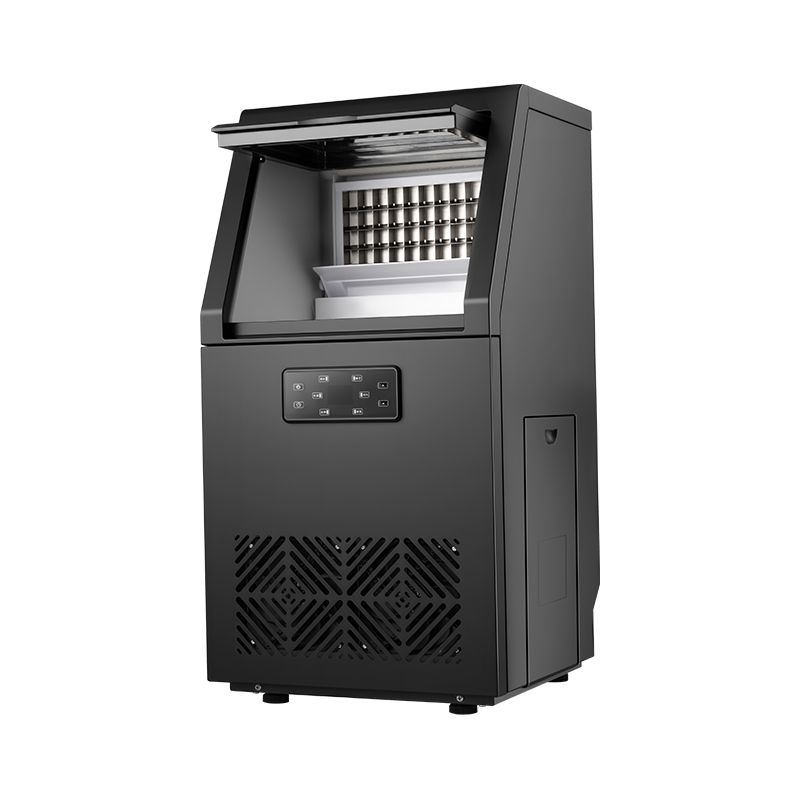
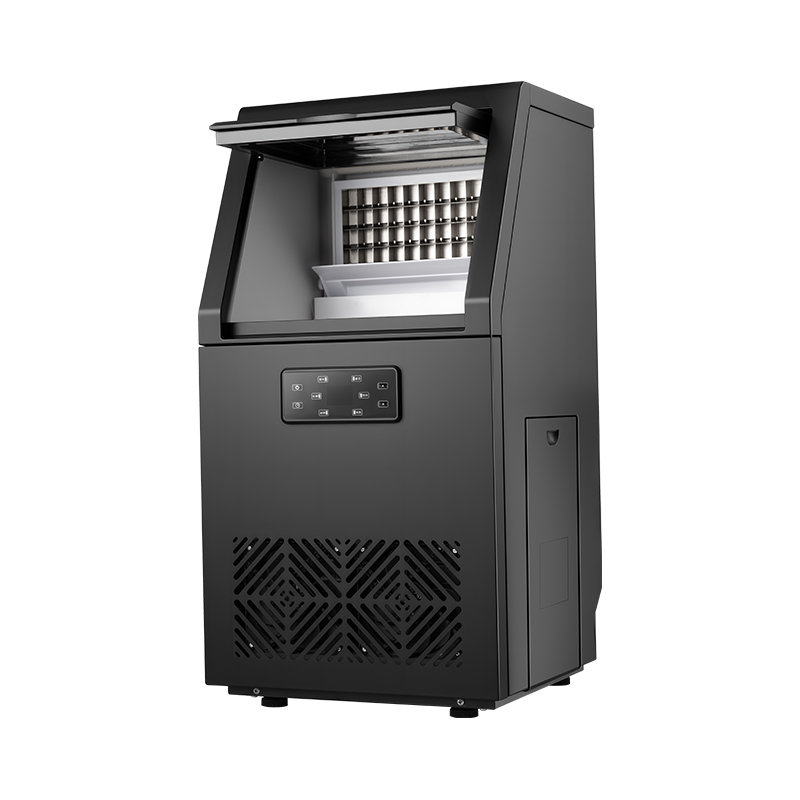
The SMK-32F Smart Integrated Commercial Ice Maker is a highly efficient ice-making device specifical...
+ VIEW MORE -
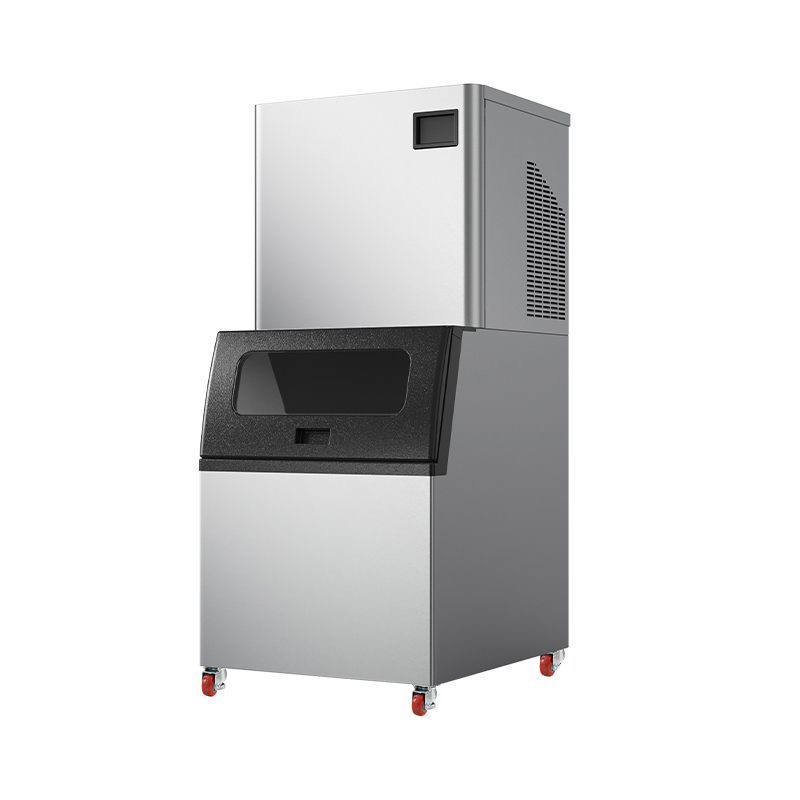
The SMK-260 FRO High-Yield Cube Ice Maker is a split-system ice machine specifically engineered for ...
+ VIEW MORE -
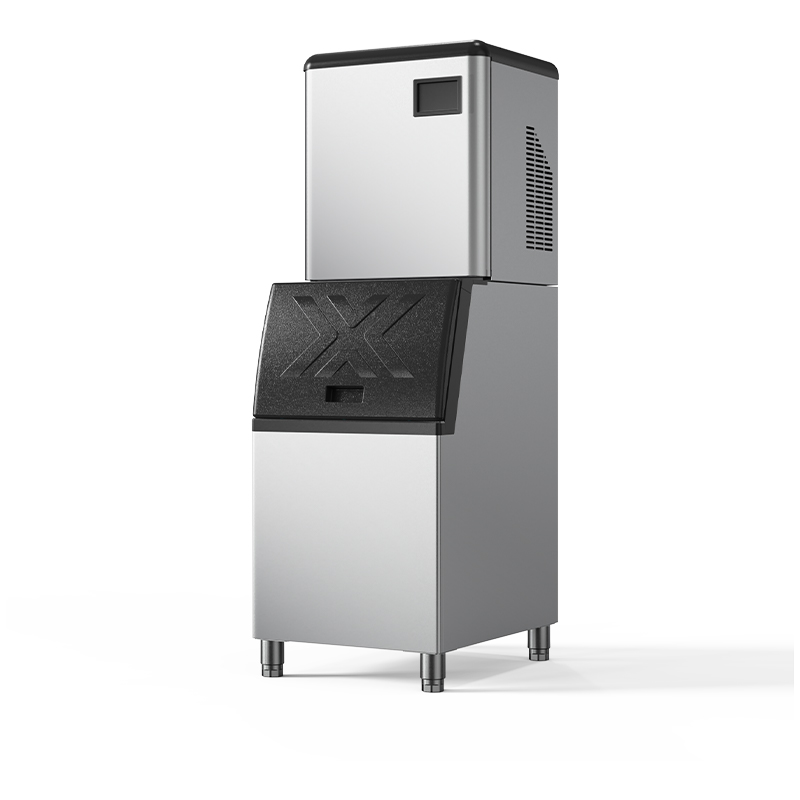
The SMK-182 FRO Stainless Steel Cube Ice Maker is a split-system square ice maker specifically engin...
+ VIEW MORE -
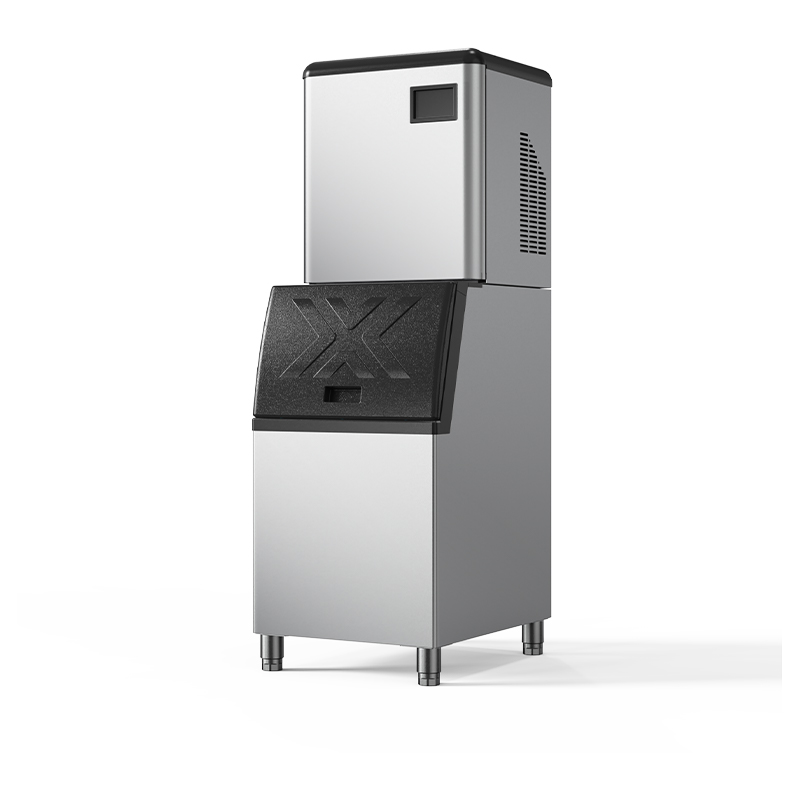
SMK-156 for High-Capacity Cube Ice Maker— A Commercial Flagship and Production Powerhouse
+ VIEW MORE -
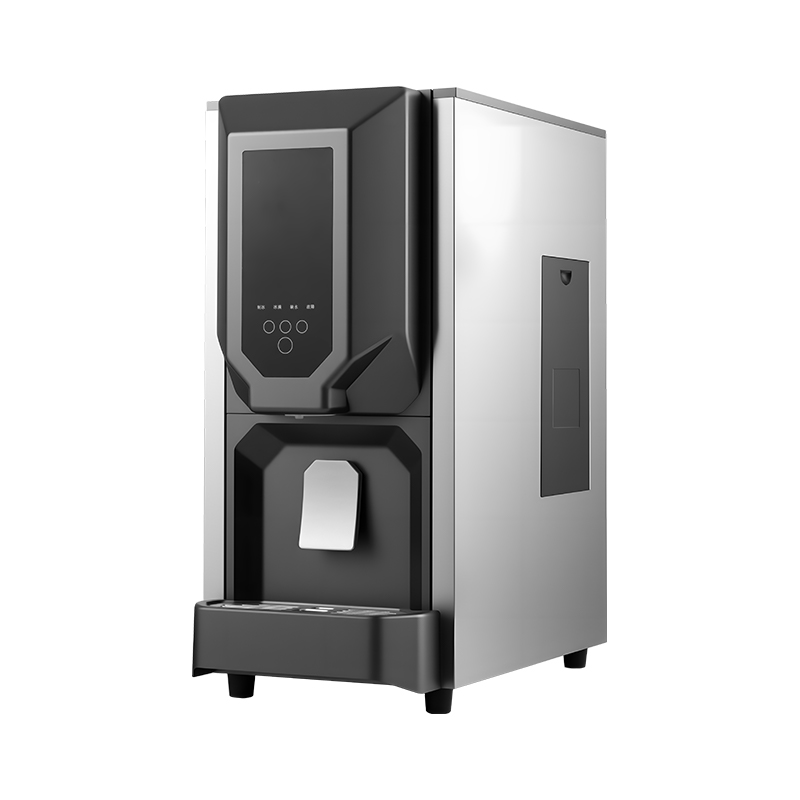
SMK-EA 50 FRO Dual-Core Indoor Nugget Ice Maker— The Barista's Ally, A Powerhouse of Efficiency
+ VIEW MORE


Product Categories
Cube Ice Maker Flake Ice Maker Extruded Pellet Ice Maker Split Type Cube Ice Maker Snowflake Ice MakerContact
 info@covaiy.com
 +1 (618) 886-8178 /+16188868178
 No. 6 Wei'er Road, Xigong District, Xinpu Town, Cixi City, Zhejiang Province, China
Copyright © Cixi City Sharmoon Electric Co., Ltd. All Rights Reserved
Custom commercial ice machine outdoor Manufacturer
OEM/ODM commercial ice machine company
