

 English
 Español
The SMK-182FRO Stainless Steel Cube Ice Maker is a split-system square ice maker specifically engine...
+ VIEW MORE
 Industry News
HOME / News & Share / Industry News / Ice Cube Maker Freezes Ice in 8 Minutes: What It Means for Commercial Buyers
Ice Cube Maker Freezes Ice in 8 Minutes: What It Means for Commercial Buyers
Sharmoon appreciates your support and sincerely looks forward to cooperating with you for mutual development!
Content
Pour water into the reservoir, press the start button, and eight minutes later you can pull out fresh, ready-to-use ice cubes. For anyone who has waited two hours for a refrigerator tray to freeze, that promise sounds too good to be true. The claim is real, but only for the first batch. An ice cube maker that freezes ice in 8 minutes relies on a fundamentally different freezing principle than a freezer, and understanding both the speed and its limits is the difference between a smart purchase and a disappointing one. This guide explains how the 8-minute cycle works, which numbers actually matter, and how Covaiy builds machines around fast, consistent freezing.
What an 8-Minute Ice Cube Maker Actually Does
An ice maker that freezes ice in eight minutes uses direct-evaporation cooling. A small electric pump draws water from the reservoir and circulates it continuously over cold evaporator pins or plates. Instead of freezing a solid block, the water freezes in thin layers, so the exposed surface stays small and the cycle stays short. When the ice reaches the selected thickness, the machine switches to a harvest cycle: the evaporator warms slightly, the cubes release, and the batch drops into the storage bin.
This is why the first batch can be ready in 8 to 11 minutes from a cold start. The machine is not cooling a large volume of air like a refrigerator. It is removing heat from a thin film of water on a cold metal surface, layer by layer, until a full cube is formed.
To understand what that speed means next to the alternatives, compare the three most common ways to make ice cubes.
| Method | Time to first batch | Typical 24-hour output | Best suited for |
|---|---|---|---|
| Standard refrigerator tray | 120–180 minutes | 1–2 trays per day | Home backup use |
| Countertop 8-minute ice maker | 8–11 minutes | 22–26 lb per day | Offices, small bars |
| Commercial cube ice machine | 12–20 minutes per batch | 100–2,000+ lb per day | Cafes, restaurants, hotels |
A refrigerator tray freezes slowly because the freezer is designed to maintain a steady temperature across a large cabinet, not to pull heat aggressively out of one tray. A fast countertop unit concentrates the entire refrigeration system on a small evaporator, which is how it finishes the job so quickly. Commercial cube machines use larger compressors and much bigger storage bins, so their per-batch time matters less; the bin keeps a steady supply ready for busy periods.
Why Ice-Making Speed Matters, and When It Does Not
Fast freezing solves a very specific operational problem: the first hour of service. A cafe opens at seven and pours the first iced drink ten minutes later. A bar gets its first orders at noon and hits a happy-hour rush at five. In both cases, a machine that produces a usable batch in 8 minutes lets staff open without borrowing ice from the restaurant next door.
A short cycle also compounds into higher daily output. If machine A finishes a batch every 10 minutes and machine B takes 15 minutes for the same batch size, machine A produces about 50 percent more ice over a working day without taking up an extra square foot of floor space. That is a meaningful advantage for a compact machine in a tight back bar.
Speed is not the whole story, though. Consider these four points alongside the 8-minute claim:
- The 8-minute figure usually refers to the first batch, not to steady-state production. Always ask for both numbers.
- Cycle time matters only if the bin can hold what the evaporator produces. An undersized bin pauses production and can empty exactly during peak hours.
- Harvest reliability is part of speed. A machine that jams during harvest wastes more time than one with a slightly longer freezing phase.
- Output claims such as 26 pounds per day assume ideal water and ambient conditions. Real-world performance depends on installation and maintenance.
What Limits How Fast an Ice Maker Can Freeze
If the technology is straightforward, why do some machines freeze in 8 minutes while others take 15? The answer comes down to a few engineering and environmental factors.
- Cooling capacity. Larger compressors and more evaporator surface area remove heat faster. This is the single biggest driver of cycle speed.
- Water temperature. Warmer incoming water forces the evaporator to remove more heat before ice can form. Colder fill water shortens the cycle.
- Ambient temperature and airflow. The heat rejected by the condenser must escape somewhere. Blocked vents raise condensing pressure, and the whole freezing process slows down.
- Ice thickness setting. Thicker cubes require more freeze time. A machine set to the smallest cube size produces ice faster than the same machine set to the maximum.
- Scale build-up. Mineral deposits on the evaporator act as an insulator. Hard water without a descaling schedule will make any machine slower, regardless of its rated cycle time.
These five factors explain why a machine can freeze in 8 minutes on a factory test bench and need 12 minutes in a warm, dusty kitchen. They also explain how to keep a fast machine fast for years.
What to Verify Before Buying a Fast Ice Maker
For B2B buyers, an 8-minute claim should be the start of the conversation, not the end. Compare machines with these checks in mind.
- Timing definition. Confirm whether the stated time is for the first batch from a cold start or for ongoing cycles.
- Steady-state output. The number that protects your revenue is the 24-hour yield, because ice is consumed continuously during busy periods.
- Condenser type and installation. Air-cooled machines are simpler and dominate indoor use; water-cooled models hold their speed in hot rooms but consume water.
- Voltage and plug type. An export machine must match the destination market. A manufacturer offering voltage adaptation removes a major procurement risk.
- Water quality plan. A basic inline filter and a descaling schedule protect the evaporator and keep cycle times close to the rated figure.
For a more detailed breakdown of how long different machine types take to produce ice, read our guide on how long it takes to make ice cubes. If you need help turning a spec sheet into a purchasing decision, talk to the Covaiy sales team before you commit.
How Covaiy Builds Ice Makers for Fast, Reliable Freezing
Covaiy, the ice machine brand of Cixi City Sharmoon Electric Co., Ltd., applies the same fast-freeze logic across a wide lineup of cube ice machines. The SMK series includes compact undercounter units, high-yield freestanding models, and modular machines for larger kitchens. All of them share a focus on short cycles, consistent harvest, and components that survive daily use. Compact SMK models can deliver a first batch in the same 8-to-12-minute window used by countertop machines, while larger modular units shift the emphasis to total daily yield.
Because Covaiy operates both as a manufacturer and as an OEM/ODM partner, commercial buyers can customize logos, cabinet materials, voltage, and packaging without compromising the refrigeration core. That flexibility matters when you are standardizing ice production across several locations or importing for a specific electrical standard.
The following machines represent the range available for fast cube production:
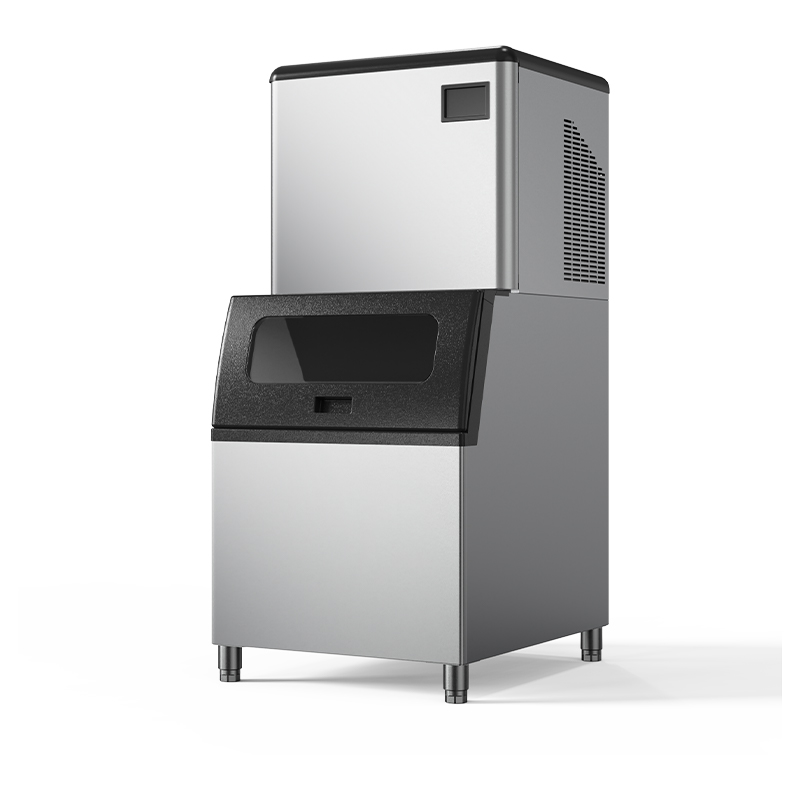 SMK-260FRO High-Yield Split-System Cube Ice MakerDesigned for high-demand environments, this split-system machine produces 260kg of ice daily with a 150kg storage bin. Its automatic water intake and air-cooled system ensure continuous supply, making it ideal for peak periods.View Product →
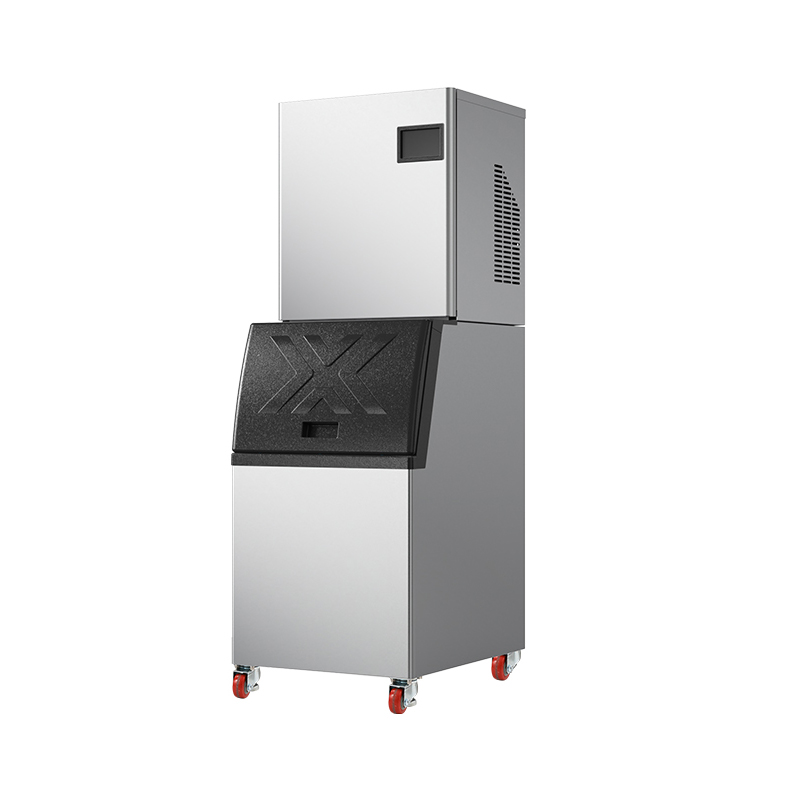 SMK-156F High-Capacity Cube Ice Maker with Split-System StorageBuilt for heavy consumption, this industrial-grade split-system machine separates ice production from storage, offering large bins up to 350kg. It can pre-stock ice for peak hours and supports flexible installation with multi-door dispensing options.View Product →
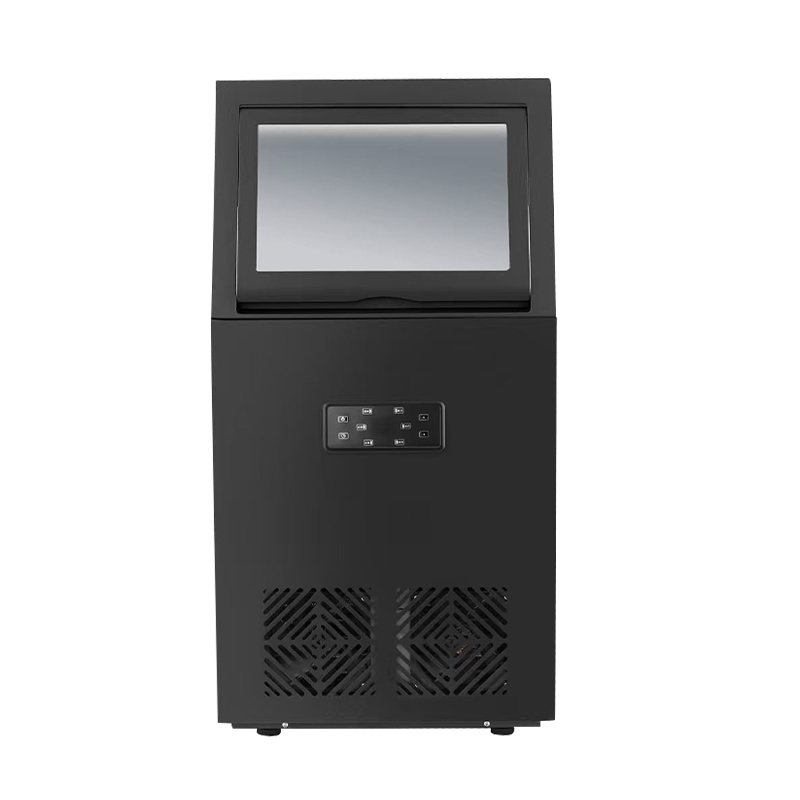 SMK-24P Spray Crystal Ice Maker for Transparent CubesUsing spray freezing technology, this professional machine produces crystal-clear, high-hardness ice blocks that melt slowly. The layer-by-layer freezing removes impurities and air, offering superior ice quality for premium beverage service.View Product →
SMK260 is built for high daily yield, SMK156 for high storage capacity, and SMK24P uses spray-type freezing to make clearer cubes quickly. A Covaiy sales engineer can match the exact model to your expected peak demand, available space, and water conditions.
Keeping the 8-Minute Cycle Fast Over Time
An 8-minute machine on day one should still be close to 8 minutes after six months. That result depends more on maintenance than on the brand.
- Descale every one to three months. Frequency depends on water hardness; if you see white scale on the evaporator or in the bin, shorten the interval.
- Clean the water paths weekly. Residual mineral water forms a thin film that slows heat transfer and changes ice quality.
- Replace the water filter on schedule. A clogged filter reduces water flow, and lower flow means slower ice formation.
- Keep the condenser air intake clear. Dust on the coil raises the operating temperature of the refrigeration system and extends the cycle.
Covaiy inspects every machine before shipment and designs the SMK series with accessible service points, but field maintenance determines whether the rated 8-minute cycle is a long-term operating fact or just a line on a datasheet.
A fast ice maker changes the rhythm of a workday: ice is ready when the first customers arrive, the bar does not run dry during happy hour, and the kitchen never waits on a tray from the walk-in. The 8-minute figure is a genuine engineering achievement, but it is only one number. Evaluate cycle time, daily yield, storage, and maintenance together, and buy from a manufacturer that builds for the long run. When you do, fast ice stops being a novelty and becomes a dependable part of your operation.
Related Product
-
-
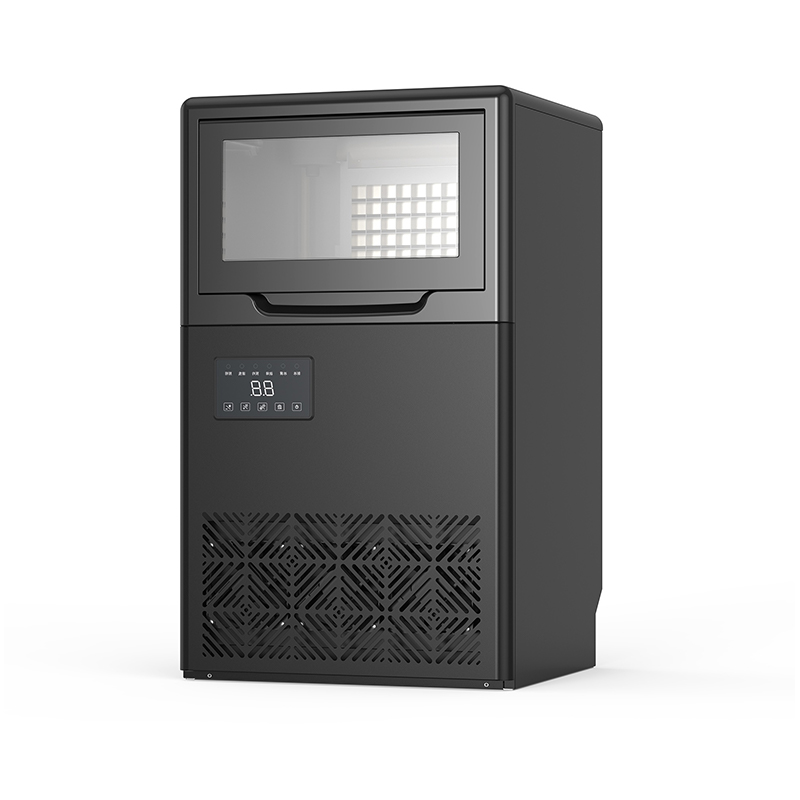
The SMK-84F High-Capacity Cube Ice Machine is an industrial-grade ice-making solution specifically e...
+ VIEW MORE -
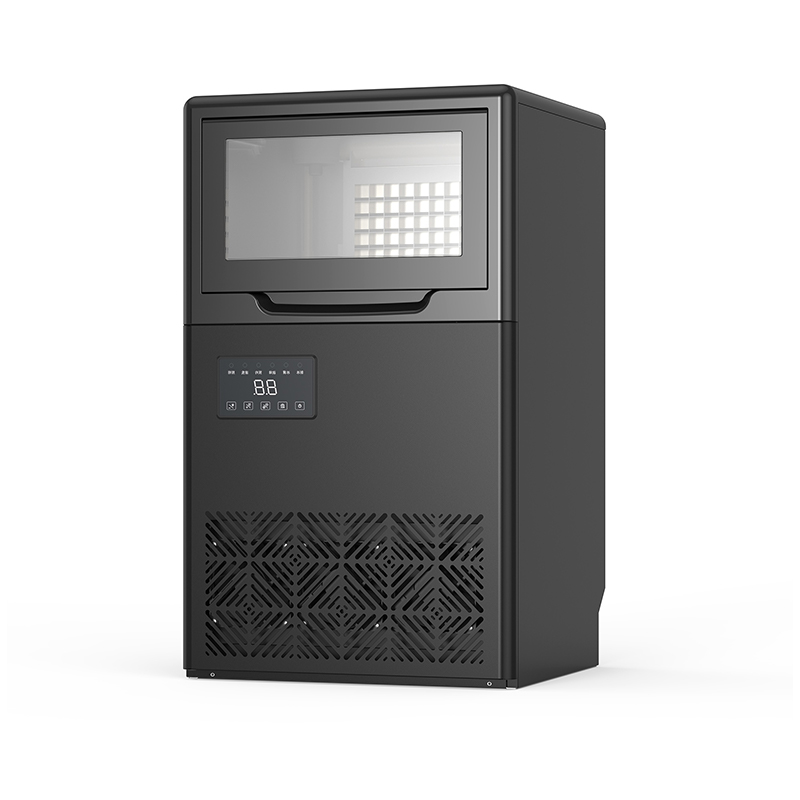
The SMK-78F Modular Cube Ice Maker is a fully automated device engineered specifically for high-effi...
+ VIEW MORE -
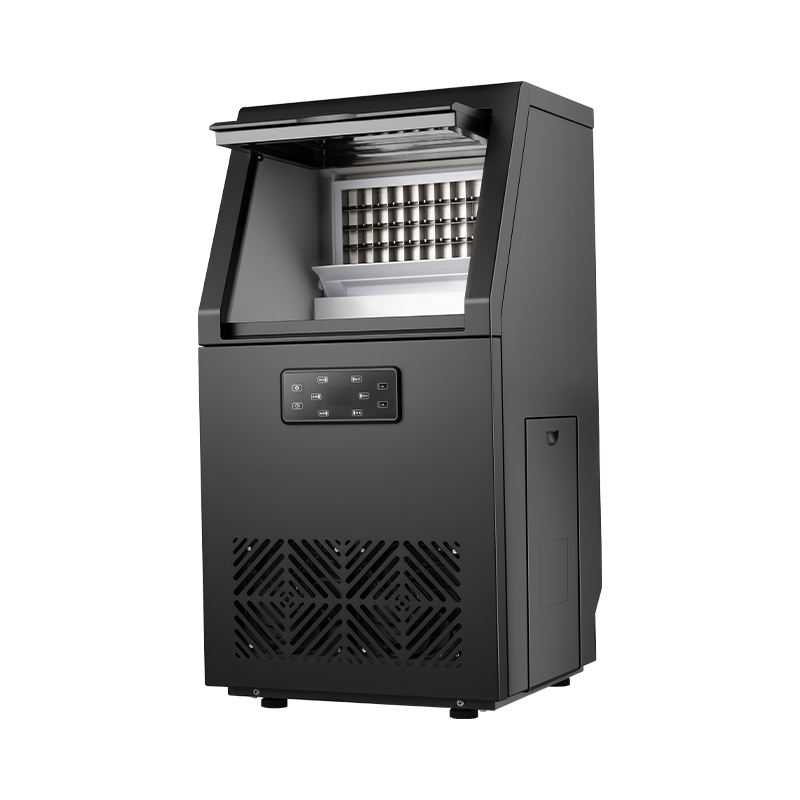
The SMK-36F Built-in Cube Ice Maker is a commercial-grade ice-making device specifically engineered ...
+ VIEW MORE -
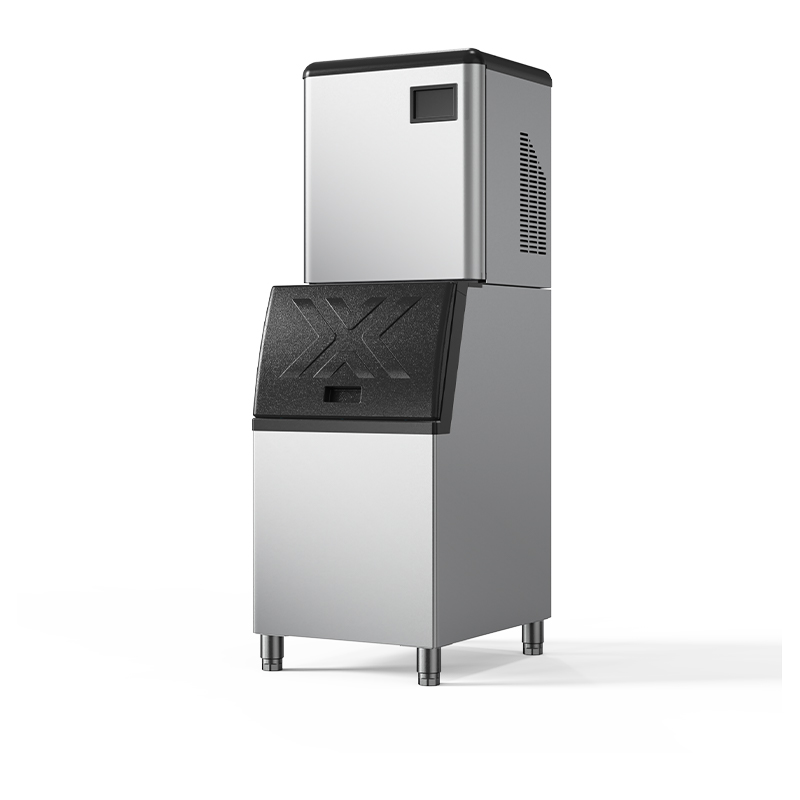
SMK-156F for High-Capacity Cube Ice Maker— A Commercial Flagship and Production Powerhouse
+ VIEW MORE -
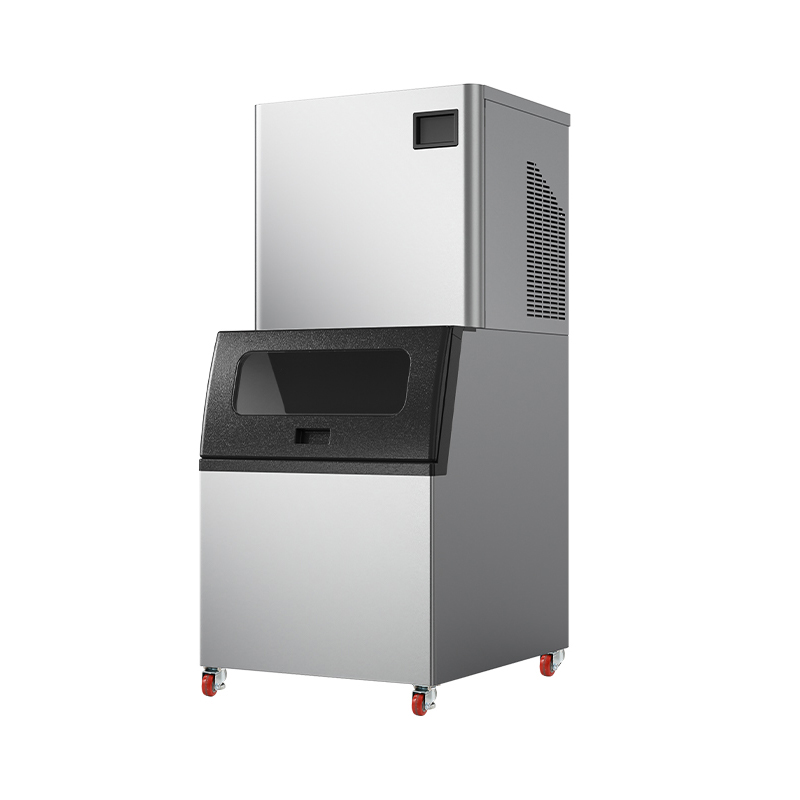
The SMK-260FRO High-Yield Cube Ice Maker is a split-system ice machine specifically engineered for h...
+ VIEW MORE


Product Categories
Cube Ice Machine Flake Ice Machine Nugget Ice Machine Crescent Ice Machine Gourmet Ice Machine Ice DispenserContact
 info@covaiy.com
 +1 (618) 886-8178 /+16188868178
 No. 6 Wei'er Road, Xigong District, Xinpu Town, Cixi City, Zhejiang Province, China
Copyright © Cixi City Sharmoon Electric Co., Ltd. All Rights Reserved
Custom commercial ice machine outdoor Manufacturer
OEM/ODM commercial ice machine company
