

 English
 Español
SMK-156F for High-Capacity Cube Ice Maker— A Commercial Flagship and Production Powerhouse
+ VIEW MORE
 Industry News
HOME / News & Share / Industry News / Largest Ice Cube Maker: Cube Size vs. Daily Output for Commercial Buyers
Largest Ice Cube Maker: Cube Size vs. Daily Output for Commercial Buyers
Sharmoon appreciates your support and sincerely looks forward to cooperating with you for mutual development!
Content
- 1 Largest Cube Size vs. Largest Daily Output: Two Different Targets
- 2 What Makes an Ice Maker Capable of Producing Large Cubes?
- 3 How Much Ice Does Your Business Really Need?
- 4 Choosing a Commercial Ice Maker Manufacturer for Large-Scale Supply
- 5 Maintenance and Operating Costs of Large Ice Makers
- 6 Match the Machine to the Meaning of "Largest"
A hotel bar manager needs 2-inch clear ice cubes that dissolve slowly in a whiskey glass. A fast-food chain needs 800 pounds of cube ice every day to chill drinks during the lunch rush. Both type "largest ice cube maker" into a search engine—and both get results that talk past each other. The word "largest" does double duty in this category: it can mean the biggest individual cube a machine can produce, or the highest daily output a system can deliver. Before you compare models, decide which kind of "largest" your operation actually needs.
This guide breaks down the engineering, capacity math, and supplier considerations behind large-cube ice makers. You will see how to match cube size, daily production, and installation style to your real-world serving volume—without paying for capacity you cannot use.
Largest Cube Size vs. Largest Daily Output: Two Different Targets
In commercial ice making, "largest" rarely refers to the physical footprint of the machine. It almost always points to one of two specifications:
- Largest cube size: the dimensions of each individual ice cube, typically measured in inches or millimeters.
- Largest daily output: the total weight of ice the machine can produce in 24 hours, usually stated in pounds or kilograms.
These two targets pull in different directions. A machine that makes very large cubes freezes water more slowly, so it produces fewer pounds per day than a machine tuned for small or nugget ice. Conversely, a high-output machine may produce thousands of small cubes but cannot form a single 2-inch clear block.
| Ice Type | Typical Cube Size | Common Daily Output | Best For |
|---|---|---|---|
| Cube ice (square) | 1–2 inches (2.5–5 cm) | 50–1,500 lbs (23–680 kg) | Bars, hotels, restaurants, beverage service |
| Nugget / pellet ice | 0.3–0.8 inch (8–20 mm) | 100–1,200 lbs (45–545 kg) | Healthcare, cafeterias, soft drinks |
| Flake ice | Under 0.2 inch (5 mm) | 200–2,000 lbs (90–900 kg) | Seafood display, food processing, rapid chilling |
| Snowflake ice | Under 0.1 inch (2–3 mm) | 100–800 lbs (45–360 kg) | Cocktails, presentation, specialty drinks |
If your goal is the largest individual cube for slow-melting drinks, 2-inch square ice is the practical ceiling for most commercial machines. If your goal is the largest total production, you should look at modular or split-type cube ice makers that can exceed 1,000 pounds per day.
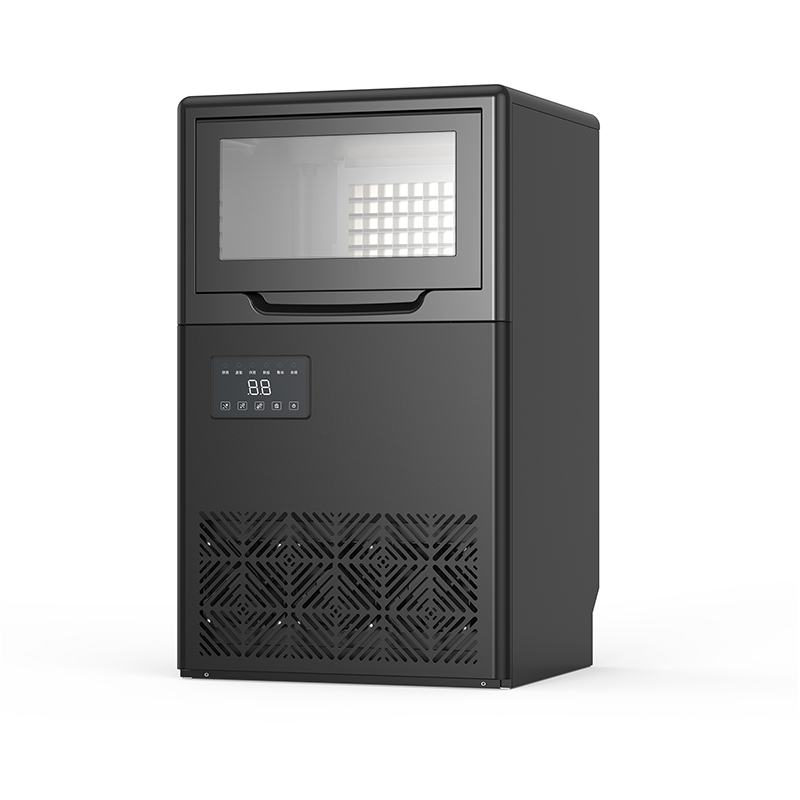 SMK91F Heavy-Duty Square Ice MachineAn all-in-one square ice maker for operations where consistent cube formation and slow-melting durability matter more than maximum production speed.View Product →
The SMK91F is built for operations that need heavy-duty square ice with consistent cube formation—ideal when cube size and durability matter more than raw speed.
What Makes an Ice Maker Capable of Producing Large Cubes?
Producing a large, clear cube is not simply a matter of pouring more water into a bigger tray. It requires precise control over freezing time, water circulation, and harvest cycles. Here are the engineering factors that separate a true large-cube machine from a standard countertop unit:
1. Evaporator design and freezing time
A 2-inch cube needs roughly 30 to 45 minutes to freeze completely, while a small nugget can form in 8 to 12 minutes. The evaporator must maintain a low enough temperature to freeze the entire volume without trapping cloudy air bubbles. Directional freezing—where water freezes from the bottom up or from one side—helps push impurities out and produces clearer ice.
2. Water circulation and harvest control
Large-cube machines use a recirculating water pump that keeps fresh water moving over the freezing surface. When the cycle ends, a hot-gas harvest valve briefly warms the evaporator so the cube releases cleanly. If the harvest timing is off, cubes crack, stick, or come out with rough edges. For a deeper look at under-cabinet 2-inch cube production, see this B2B buyer's guide to 2-inch cube ice makers.
3. Refrigeration capacity and ambient tolerance
A machine rated for 500 pounds per day at 70°F ambient may only deliver 350 pounds at 90°F. Large-cube makers compensate with higher-capacity compressors and larger condensers. Air-cooled models work well in temperate climates, while water-cooled or remote systems handle hot kitchens and tight spaces.
In short, the largest cube size comes from slower freezing and tighter process control—not from simply running the machine longer.
How Much Ice Does Your Business Really Need?
Before choosing the largest ice cube maker, calculate your peak demand rather than your average. A restaurant with 200 seats might serve 400 drinks during a two-hour lunch rush. If each drink uses about 0.5 pounds of ice, that is 200 pounds of ice in two hours—far more than a typical 50-pound-per-day countertop machine can supply.
Use this simple formula to estimate daily production:
- Count your busiest hour's beverage or display volume.
- Multiply by pounds of ice per serving (0.4–0.75 lbs for drinks, 1–2 lbs for seafood display).
- Multiply by the number of peak hours, then add 20–30% buffer for waste and melting.
For example, a hotel banquet kitchen that serves 600 guests over three hours may need 900 to 1,200 pounds of cube ice. That puts you in the modular or split-type category, where multiple evaporators or a separate condensing unit can run continuously without overheating.
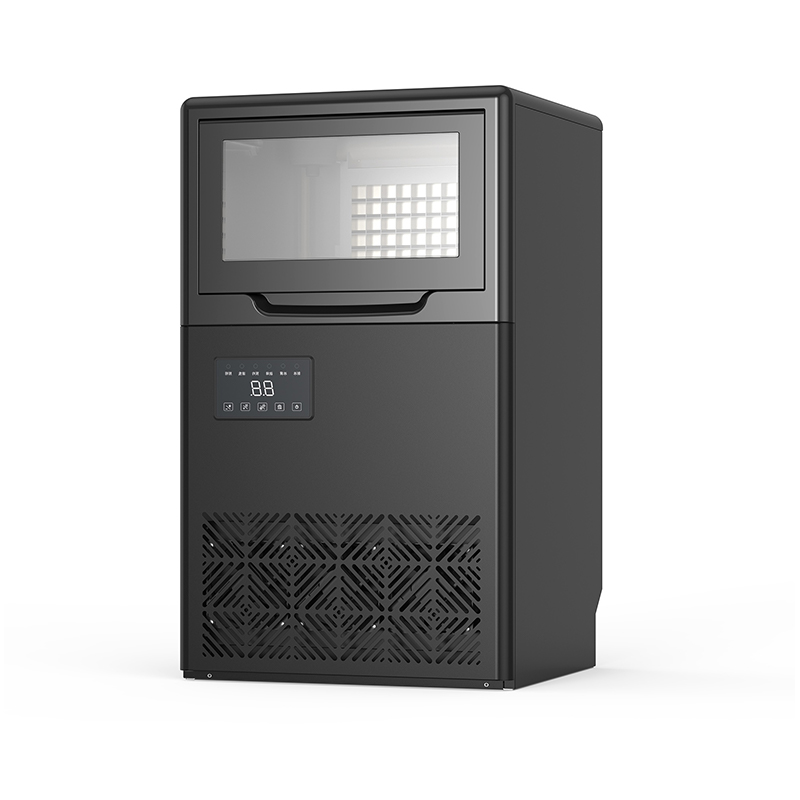 SMK84F High-Capacity Cube Ice MachineAn integrated cube ice maker and storage unit for high-frequency commercial use, suited to hotels, catering kitchens, and large beverage programs.View Product →
The SMK84F is designed for high-capacity cube production in commercial settings, making it a strong fit for hotels, catering kitchens, and large beverage programs.
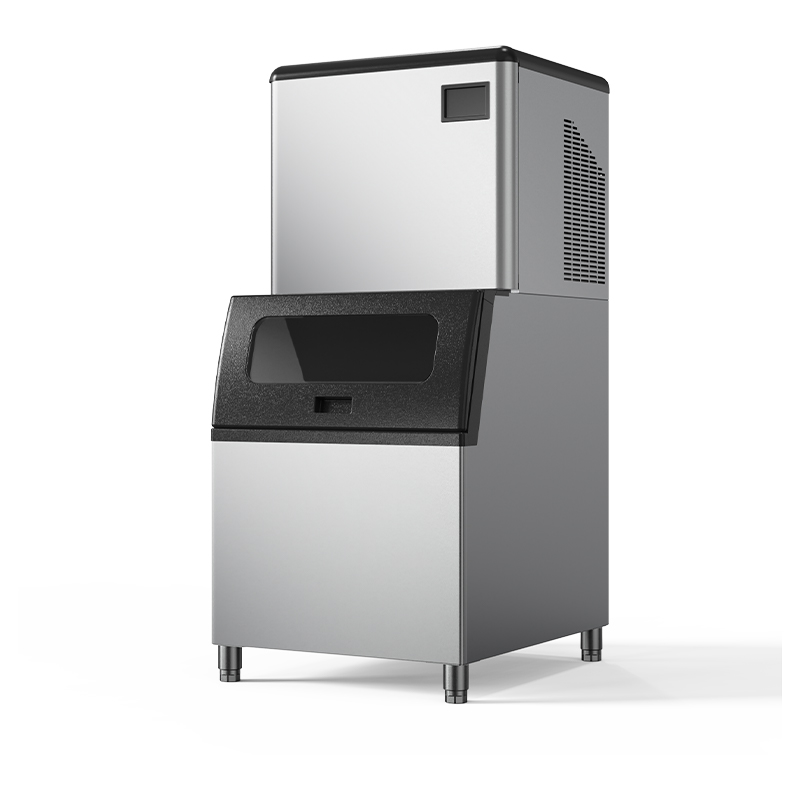 SMK260-FRO Split-Type High-Yield Cube Ice MakerA split-system commercial cube ice maker for high-volume continuous supply, with separated ice-making head and condensing unit for tight spaces and very high yield.View Product →
When your daily demand exceeds what a single self-contained unit can handle, the SMK260-FRO split-type system separates the ice-making head from the condensing unit—useful for tight spaces and very high yield.
Choosing a Commercial Ice Maker Manufacturer for Large-Scale Supply
When you are sourcing large-cube ice makers for a chain, a distributorship, or an OEM/ODM project, the machine specification is only half the decision. The other half is the manufacturer's ability to deliver consistent quality at volume.
Look for a supplier with:
- In-house R&D and an automation department that builds and maintains production equipment.
- Experience across multiple ice types—cube, nugget, flake, and snowflake—so they understand how freezing parameters change with cube size.
- Documented quality systems and export experience with global brands.
- Warehousing and logistics capacity to support repeat orders.
Cixi City Sharmoon Electric Co., Ltd., known by its brand Shar Moon, has been manufacturing water-related appliances since 2003. The company employs more than 260 people and has been recognized as a high-tech enterprise and a Ningbo "specialized and sophisticated" small giant. Its commercial ice maker line includes cube, extruded pellet, flake, snowflake, and split-type cube machines. An automated production department and a smart stereoscopic warehouse support volume orders. You can see the factory and production capabilities here.
For B2B buyers, the practical takeaway is to request a sample or pilot unit, verify the actual daily output at your ambient temperature, and confirm the harvest cycle produces the cube size you need. A manufacturer that can explain the freezing curve behind a 2-inch cube is more likely to deliver repeatable results than one that only quotes a headline capacity number.
Maintenance and Operating Costs of Large Ice Makers
Large-cube machines cost more to run than small countertop units, mainly because they stay on longer and move more water. Three maintenance habits protect both ice quality and energy efficiency:
Water filtration
Scale and minerals are the enemy of clear ice. Replace sediment and carbon filters every 3–6 months, depending on local water hardness. A dedicated scale inhibitor or reverse-osmosis pre-treatment can extend evaporator life in hard-water areas.
Cleaning and sanitizing
Follow the manufacturer's cleaning cycle every 3–4 months for commercial use. Remove the ice bin, wash interior surfaces with a nickel-safe ice machine cleaner, and flush the water system. Skip this step and you will see cloudy cubes, slower harvests, and higher energy bills.
Condenser care
Air-cooled condensers need monthly brushing or vacuuming to remove dust and grease. A clogged condenser forces the compressor to work harder, reducing daily output exactly when you need it most. Water-cooled models need regular descaling of the water circuit.
Budget for these costs when comparing quotes. A cheaper machine with poor filtration compatibility can cost more over five years than a well-matched unit with a slightly higher purchase price.
Match the Machine to the Meaning of "Largest"
If you need the largest individual cube, prioritize machines rated for 2-inch square ice and verify the harvest cycle. If you need the largest daily output, calculate your peak demand and choose a modular or split-type system with enough refrigeration capacity for your climate. In both cases, the manufacturer's process control matters as much as the spec sheet.
Shar Moon builds commercial cube, nugget, flake, and snowflake ice makers for global B2B buyers. To discuss a high-capacity or large-cube configuration for your project, request a quote and share your daily output target.
Related Product
-
-
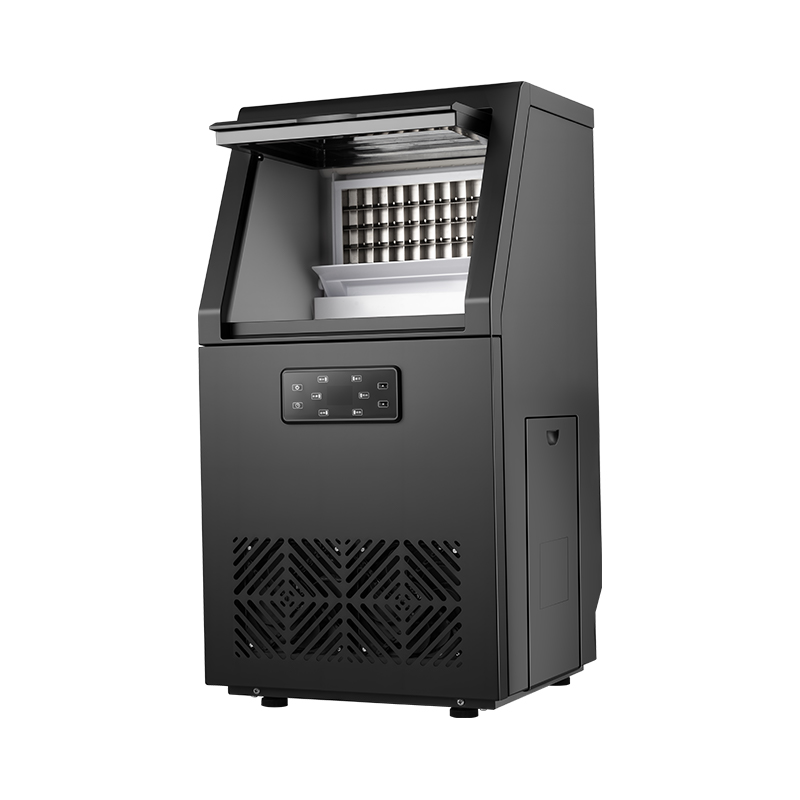
The SMK-24F Full-Cube Undercounter Ice Maker is a fully automated ice-making unit meticulously desig...
+ VIEW MORE -
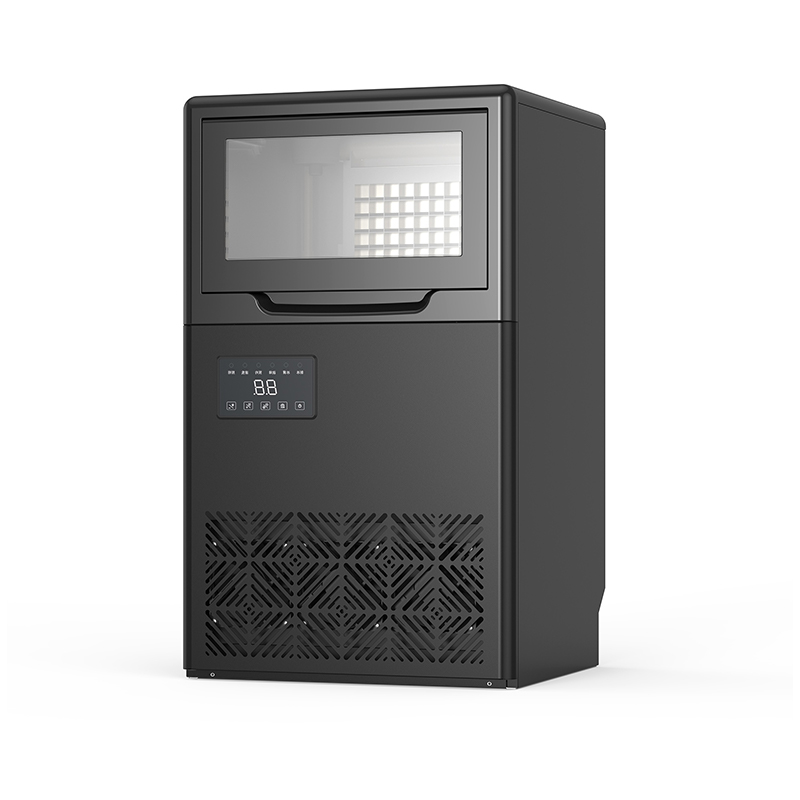
The SMK-78F Modular Cube Ice Maker is a fully automated device engineered specifically for high-effi...
+ VIEW MORE -
The SMK-36F Built-in Cube Ice Maker is a commercial-grade ice-making device specifically engineered ...
+ VIEW MORE -
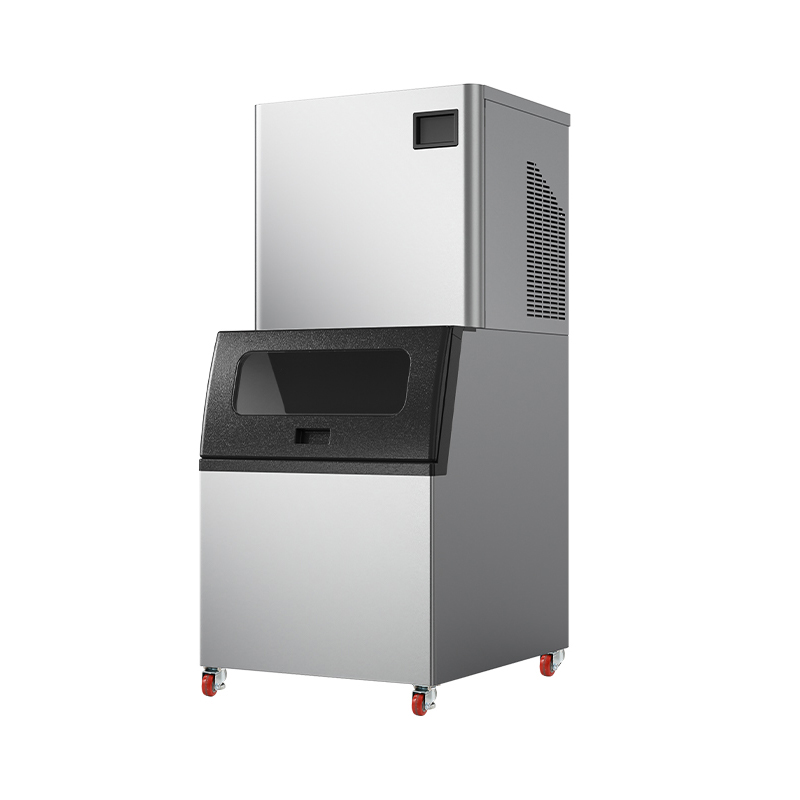
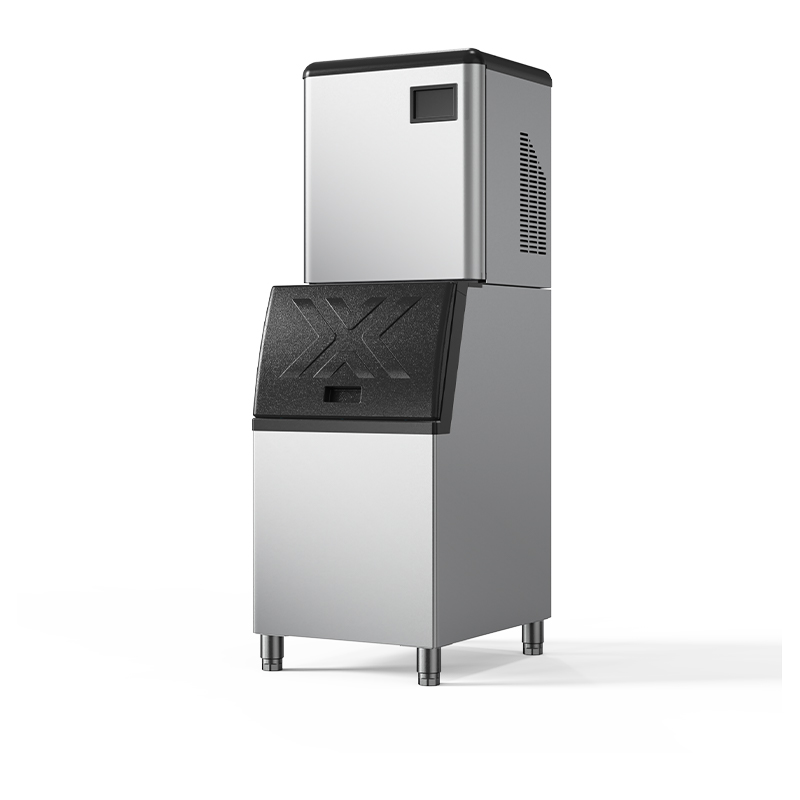
The SMK-260FRO High-Yield Cube Ice Maker is a split-system ice machine specifically engineered for h...
+ VIEW MORE -
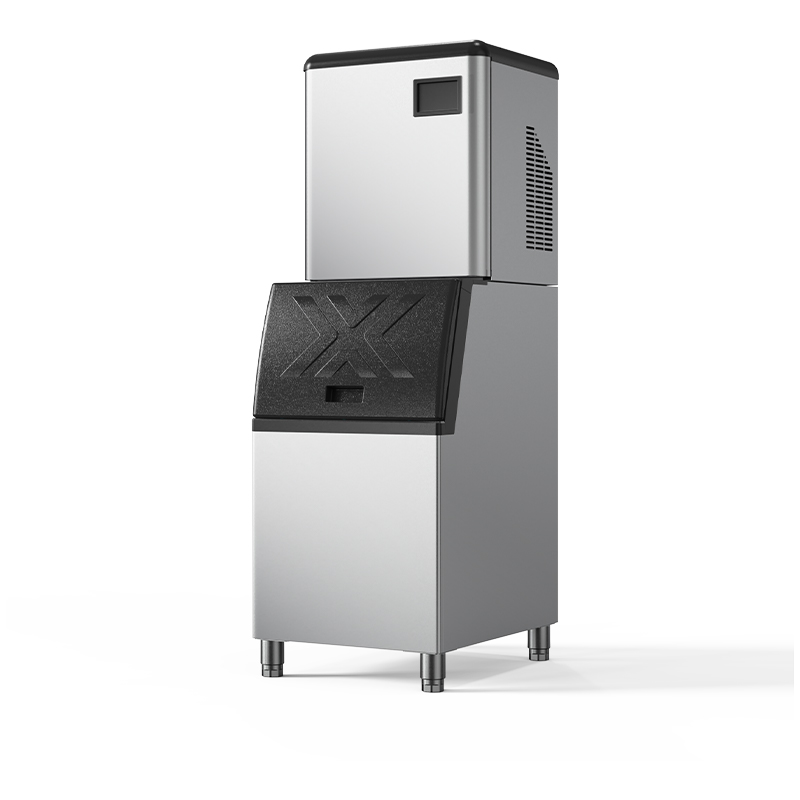
The SMK-182FRO Stainless Steel Cube Ice Maker is a split-system square ice maker specifically engine...
+ VIEW MORE


Product Categories
Cube Ice Machine Flake Ice Machine Nugget Ice Machine Crescent Ice Machine Gourmet Ice Machine Ice DispenserContact
 info@covaiy.com
 +1 (618) 886-8178 /+16188868178
 No. 6 Wei'er Road, Xigong District, Xinpu Town, Cixi City, Zhejiang Province, China
Copyright © Cixi City Sharmoon Electric Co., Ltd. All Rights Reserved
Custom commercial ice machine outdoor Manufacturer
OEM/ODM commercial ice machine company
