

 English
 Español
The SMK-36F Built-in Cube Ice Maker is a commercial-grade ice-making device specifically engineered ...
+ VIEW MORE
 Industry News
HOME / News & Share / Industry News / Little Cube Ice Maker Guide: Cube Size, Output and B2B Sourcing | Covaiy
Little Cube Ice Maker Guide: Cube Size, Output and B2B Sourcing | Covaiy
Sharmoon appreciates your support and sincerely looks forward to cooperating with you for mutual development!
Content
- 1 What a Little Cube Actually Measures
- 2 Why Small Cubes Change the Economics of a Drink Programme
- 3 The Three Formats That Make Sense for Small Cubes
- 4 Sizing Output, Bin and Peak-Hour Demand
- 5 Water, Air and Service Conditions That Decide Satisfaction
- 6 Sourcing Little Cube Machines for a Private-Label Programme
- 7 What to Confirm on the Quotation
Ice that melts before a customer reaches the last third of the glass is an expensive way to serve a drink. A little cube ice maker tackles that problem at the source: it produces small, dense square cubes, usually 20 mm to 26 mm across, quickly enough to keep pace with a busy bar or convenience counter, while taking up roughly the counter space of a microwave.
The practical answer comes first. For 60 to 300 cold drinks a day, specify a compact unit rated at 25–50 kg per 24 hours with a 6–12 kg storage bin, and stay with air cooling only if the room stays below 32 °C. Above that peak, or if nobody can refill a bin mid-service, a built-in or modular format earns its higher price. The sections below explain the numbers behind those limits, and where they stop applying.
What a Little Cube Actually Measures
Cube size is a specification, not a marketing phrase. Suppliers quote it in millimetres or in fractions of an inch, and the gap between a half dice cube and a full dice cube changes how a drink feels in the mouth, how fast it dilutes, and how many pieces fit into a 350 ml glass.
| Cube type | Typical size | Weight per cube | Melt time in a chilled drink | Best use |
|---|---|---|---|---|
| Half dice (little cube) | 20–23 mm | 8–10 g | 8–12 minutes | High-volume soft drinks, iced coffee, fast bar service |
| Full dice (standard) | 26–29 mm | 12–16 g | 14–20 minutes | General restaurant and bar service |
| Gourmet / large cube | 32–40 mm | 25–35 g | 25–35 minutes | Spirits, premium cocktails, slow sipping |
The melt times above assume a drink served at about 4 °C in a 25 °C room. Drop the room to 20 °C and a little cube holds noticeably longer; pour into a warm glass and it disappears in half the time. Cube size alone rarely fixes a dilution complaint, which is why glass pre-chilling and dispenser design deserve equal attention.
Why Small Cubes Change the Economics of a Drink Programme
Start with the conclusion: little cubes lower cost per serve in high-volume soft drinks and mixed drinks, and they raise cost per serve in premium spirit service, where a fast-melting cube is a defect rather than a feature.
- Yield per cycle: a small-cube evaporator freezes thinner slabs, so cycles typically run 12–18 minutes instead of 20–25. More cycles per hour means more ice from the same compressor.
- Dilution: a 9 g cube gives up its melt water faster than a 30 g gourmet cube, which is welcome in a cola and unwelcome in a 12-year-old whisky.
- Glass fill: small cubes settle tighter, so a glass looks full with less ice by weight — a real cost lever when consumption is tracked in kilos per week.
- Energy per kilo: thinner cubes freeze faster but carry more surface moisture at harvest, so a badly tuned machine drips and wastes water. Harvest timing matters as much as cube geometry.
The Three Formats That Make Sense for Small Cubes
Countertop and portable units
Rated from roughly 10 to 20 kg per 24 hours, these plug into a standard socket, need no permanent drain in most designs, and suit kiosks, offices, holiday rentals and small cafés. The trade-off is a small bin, often 1–2 kg, so somebody has to be on site to top it up during a rush.
Undercounter and built-in units
Designed to slide beneath a 900 mm counter, these models usually deliver 25–50 kg per 24 hours into a 6–12 kg bin and are the workhorse of bars, coffee shops and hotel pantry areas. Front ventilation and a serviceable condenser filter are non-negotiable; a machine boxed in on three sides loses capacity and eventually trips its high-pressure cut-out. Covaiy builds this format with a removable front panel so cleaning does not require pulling the unit out of the cabinet.
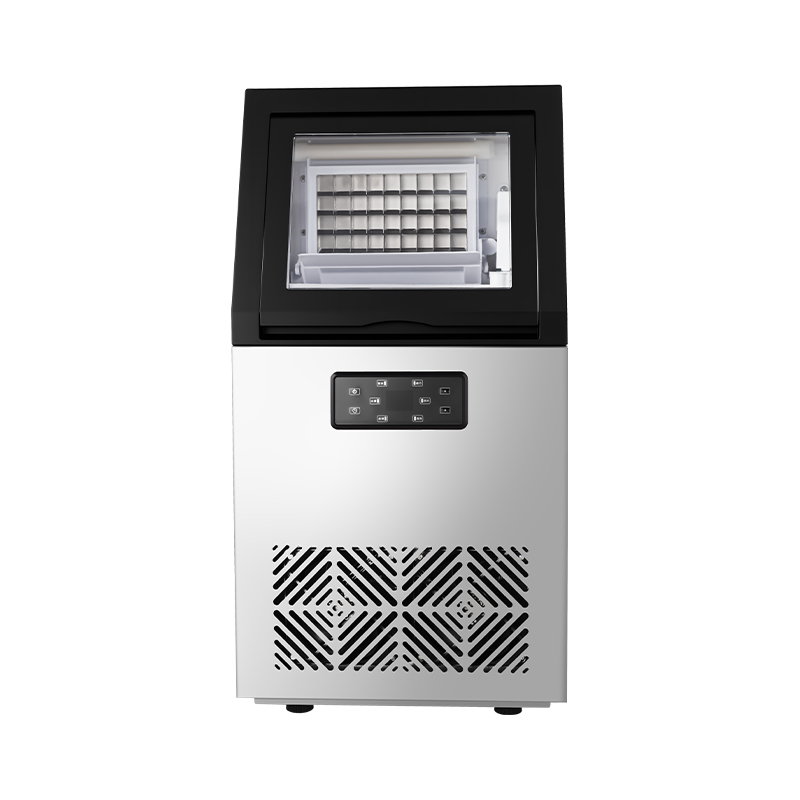 SMK-24F Full-Cube Undercounter Commercial Ice MakerA compact 24 kg/day undercounter unit with 5 kg storage, R290 refrigerant and low 160 W power, suited to bars, coffee shops and beverage service.View Product →
Modular heads and remote bins
When counter space is precious, a modular head sits on a separate storage bin or drops ice through a chute into a below-counter chest. Output stretches from 50 kg to several hundred kilos per 24 hours, and capacity can be added later without replacing the whole system.
Sizing Output, Bin and Peak-Hour Demand
Daily output figures on a spec sheet assume 21 °C ambient air and 10 °C incoming water. In a 32 °C kitchen the same machine may deliver 20–30 % less, so size against the worst week of the year, not the average one.
- Count the drinks poured in the busiest hour, not the busiest day.
- Multiply by cubes per glass — 8 to 10 for a 350 ml tumbler filled with half dice cubes.
- Convert to kilos: at 9 g per cube, 100 drinks work out at roughly 8 kg of ice.
- Subtract what the bin already holds, then check that the remaining kilos can be produced within that hour after derating for room temperature.
| Daily output | Drinks per day (approx.) | Bin capacity | Recommended format |
|---|---|---|---|
| 15–25 kg/24 h | 40–80 | 2–5 kg | Countertop, plug-and-play |
| 25–50 kg/24 h | 80–200 | 6–12 kg | Undercounter or built-in |
| 50–90 kg/24 h | 200–400 | 15–30 kg | Modular head with separate bin |
If the arithmetic lands between two models, take the larger one. Ice demand grows with a menu long before anyone notices, and a machine running flat out all afternoon wears its compressor faster than one with headroom. Integrated commercial units in the middle of the range usually offer the best balance of footprint, bin size and service access.
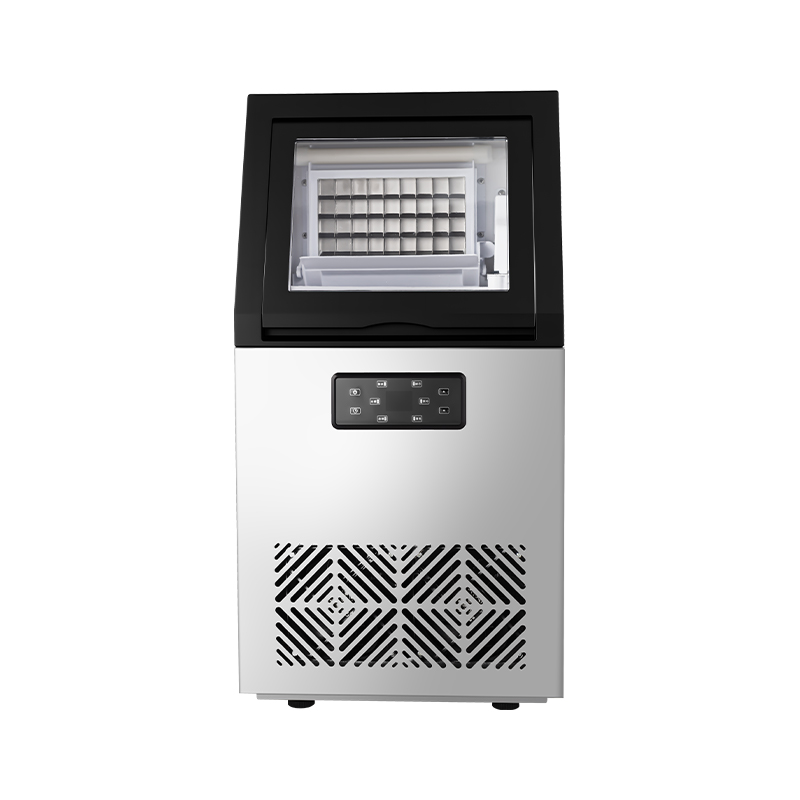 SMK-32F Smart Integrated Commercial Ice MakerAn all-in-one 32 kg/day commercial unit with 5 kg bin, R290 refrigerant and automatic full-bin stop/restart, balancing footprint, storage and service access for beverage venues.View Product →
Water, Air and Service Conditions That Decide Satisfaction
Hard water is the quiet killer of cube quality. Calcium and magnesium scale on the evaporator slows heat transfer, produces cloudy, soft cubes and stretches harvest cycles until the machine eventually stalls.
- Water hardness: test the supply; above roughly 200 mg/l as calcium carbonate, add a filter or softener before the machine, not after it.
- Clearance: allow 100 mm at the front and 50–100 mm at the rear or side as the manual requires — built-in formats live or die by airflow.
- Ambient limit: most compact units are rated to 38–43 °C; tropical rooms without extraction push past that in summer.
- Drain: gravity drains need a fall of at least 1:50 and an air gap to prevent backflow.
- Cleaning cadence: descale and sanitise the evaporator and bin every 3–6 months in hard-water areas. It is a 30-minute job that protects a five-year asset.
Sourcing Little Cube Machines for a Private-Label Programme
For distributors, hotel groups and appliance brands, the specification questions shift from “which model” to “which factory”. Covaiy, the ice-maker brand of Cixi City Sharmoon Electric, has built small appliances in Zhejiang since 2003 and now runs cube, flake, nugget, crescent and gourmet lines from one site, with OEM and ODM work covering housing design, voltage variants, logo application and packaging. The company background behind those lines is documented on the about page.
Cube clarity is the usual differentiator in a private-label portfolio. Spray-system machines freeze a transparent cube that photographs well in a glass and commands a premium in cocktail and spirits service, while standard dice units cover volume accounts. Buying both formats from one supplier keeps spare parts, filtration kits and service documentation consistent across the range.
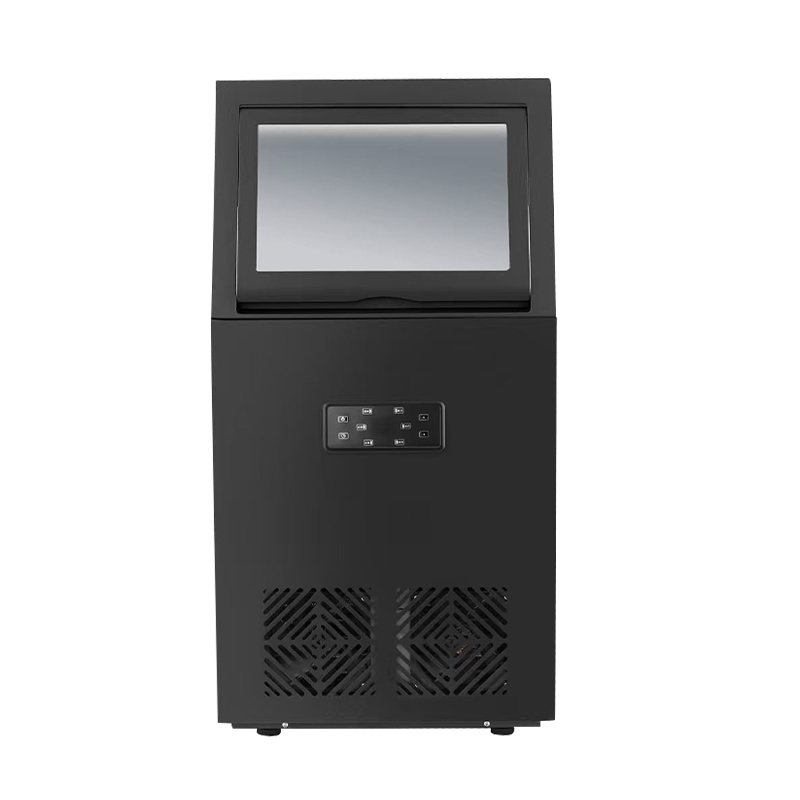 SMK-24P Spray Crystal Ice Maker for WholesaleA spray-type commercial ice maker producing clear, dense, slow-melting cubes for premium cocktails and coffee service, with adjustable thickness and automatic controls.View Product →
What to Confirm on the Quotation
A quotation that lists only a model number and a price leaves the expensive decisions open. These five points should be settled in writing before a purchase order is raised.
- Derated output at your site temperature and incoming water condition, not the catalogue headline.
- Cube dimensions in millimetres, plus an approved sample cube for reference.
- Electrical specification: voltage, frequency, plug type and refrigerant.
- Bin capacity and the accessories included — filter, scoop, water hoses, drain fittings.
- Warranty split between the compressor and the rest of the unit, and who pays freight on a claim.
A little cube ice maker is a small piece of equipment with an outsized effect on how a drink is remembered. Get cube size, peak-hour output and installation clearance right, and the machine disappears into the background — which is exactly what good equipment should do. Buyers who want their sizing checked against a real floor plan can reach the Covaiy team through the contact page.
Related Product
-
-
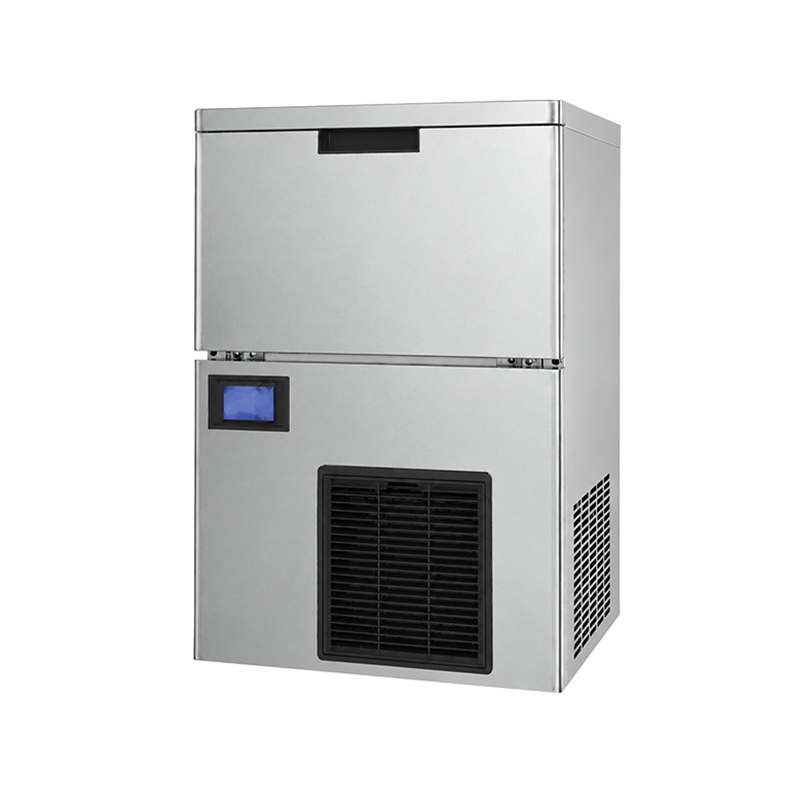
The Covaiy SMK-80F-35PF Gourmet Ice Machine is designed to produce high-quality big cube ice for com...
+ VIEW MORE -
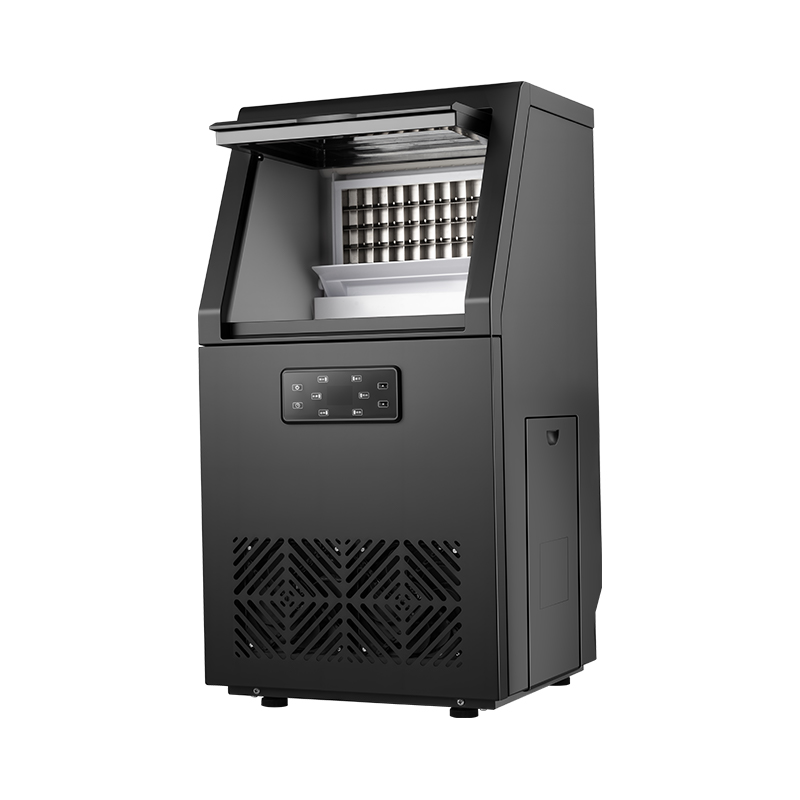
The SMK-24F Full-Cube Undercounter Ice Maker is a fully automated ice-making unit meticulously desig...
+ VIEW MORE -
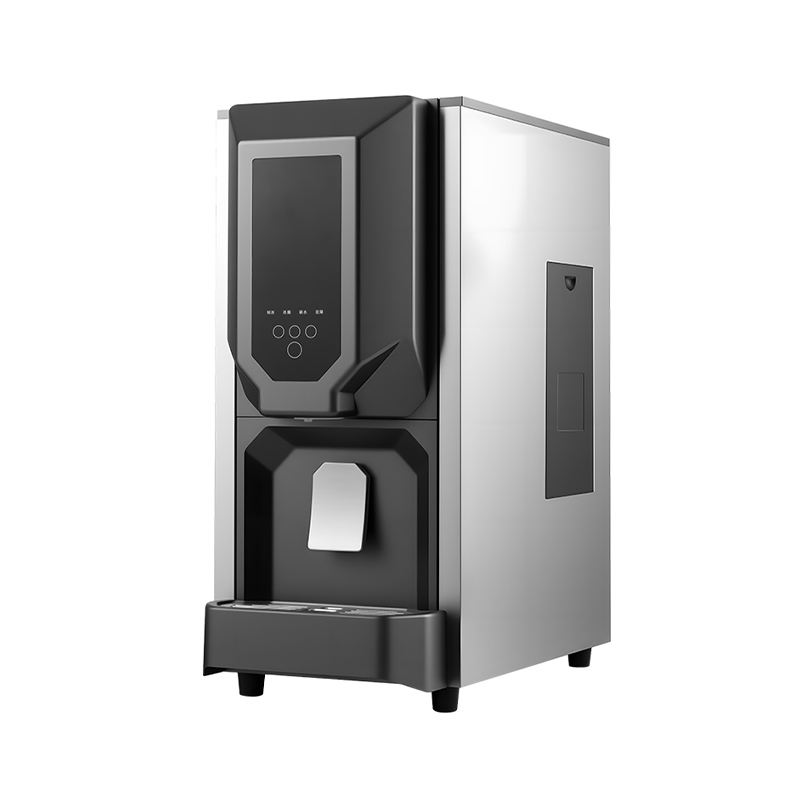
The Covaiy SMK-60BS Ice Dispenser is a compact and efficient commercial ice-making solution designed...
+ VIEW MORE -
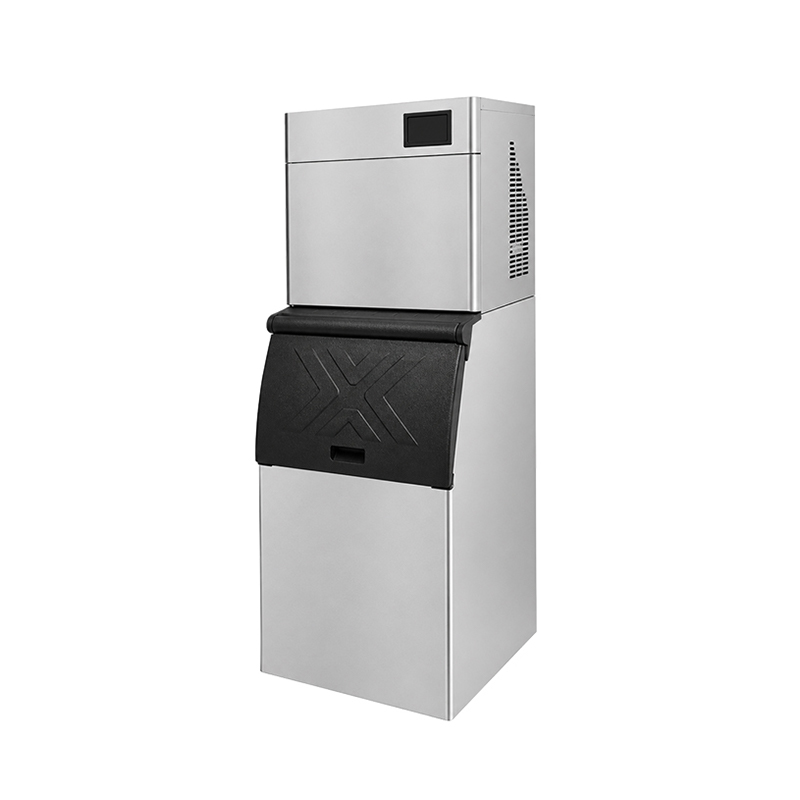
COVAIY Commercial Ice Maker – 200kg Daily Ice ProductionThe COVAIY commercial ice maker is designed ...
+ VIEW MORE -
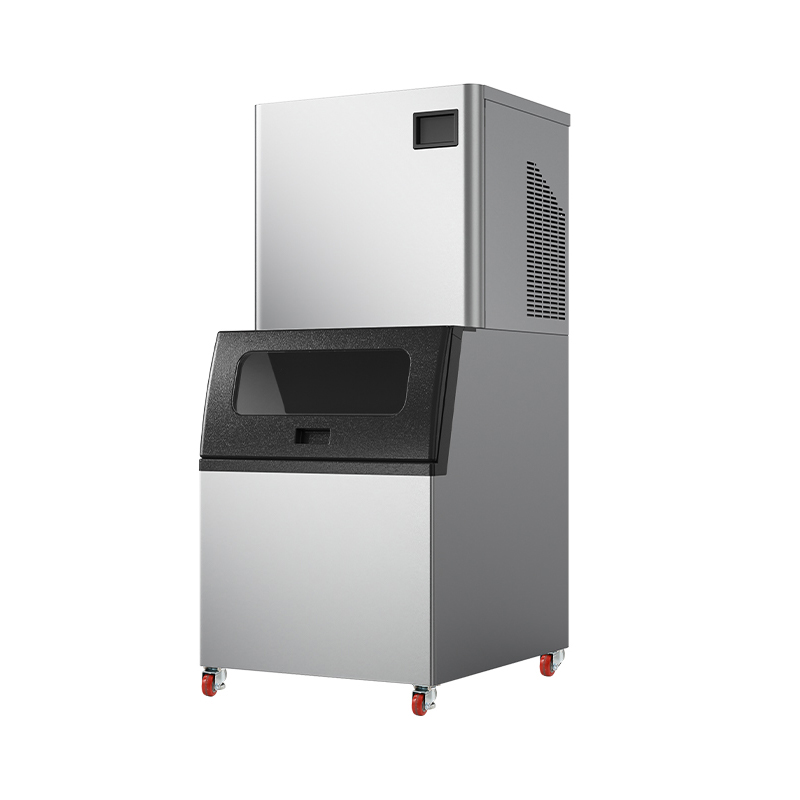
The SMK-260FRO High-Yield Cube Ice Maker is a split-system ice machine specifically engineered for h...
+ VIEW MORE


Product Categories
Cube Ice Machine Flake Ice Machine Nugget Ice Machine Crescent Ice Machine Gourmet Ice Machine Ice DispenserContact
 info@covaiy.com
 +1 (618) 886-8178 /+16188868178
 No. 6 Wei'er Road, Xigong District, Xinpu Town, Cixi City, Zhejiang Province, China
Copyright © Cixi City Sharmoon Electric Co., Ltd. All Rights Reserved
Custom commercial ice machine outdoor Manufacturer
OEM/ODM commercial ice machine company
