The SMK-24F Full-Cube Undercounter Ice Maker is a fully automated ice-making unit meticulously desig...
+ VIEW MORE
+1 (618) 886-8178


Get A Quote
 Industry News
HOME / News & Share / Industry News / Little Square Ice Cube Maker Buying Guide: Cube Sizes, Output and Formats
Little Square Ice Cube Maker Buying Guide: Cube Sizes, Output and Formats
Sharmoon appreciates your support and sincerely looks forward to cooperating with you for mutual development!
Content
- 1 What "Little Square" Means on a Specification Sheet
- 2 Why Small Square Cubes Chill Faster — and What They Cost You
- 3 Tray, Countertop Portable, or Undercounter Machine?
- 4 The Specs That Predict Whether You Will Be Happy
- 5 Capacity Math Most Buyers Skip
- 6 For Distributors and Private-Label Brands: What to Verify at the Factory
- 7 Putting the Decision in Order
A restaurant in the middle of a dinner rush does not need more ice — it needs ice that works faster. That is the practical argument for a little square ice cube maker: smaller dice expose far more surface to the liquid, so the glass comes down to temperature in seconds rather than minutes, and the cubes drop into highball glasses, shaker tins and blender jugs without jamming the neck.
Here is the short answer before the detail. Fix the cube dimension first, usually 18–25 mm for bars, cafés and home setups. Then match daily output to your busiest two hours. Only then decide between a tray, a countertop unit and a plumbed undercounter machine. Buyers who reverse that order — choosing on price or footprint first — usually end up with a machine that runs dry at peak or pushes cubes too large for the glassware already on the shelf.
What "Little Square" Means on a Specification Sheet
"Small" is not a standard. Two machines can both be sold as small-cube makers and produce ice that looks completely different once it is in the glass, so the dimension line on the datasheet matters far more than the adjective on the box.
Most moulds fall into four families. Full dice are the classic square cube and the closest thing to a default. Half dice keep the width but slice the height, so they read as small squares from above and melt quickly. Mini cubes are the compressed, slightly softer squares typical of countertop portables. Large or gourmet cubes sit at the opposite end and are chosen for slow melting in whisky service, not for fast chilling.
| Cube style | Typical size | Behaviour in the glass | Usual machine format | Best suited to |
|---|---|---|---|---|
| Full dice (small square) | 22 × 22 × 22 mm | Square, dense, clean edges, moderate melt | Undercounter and modular cube machines | Soft drinks, cocktails, general bar service |
| Half dice | 22 × 22 × 11 mm | Thin square slab, melts fast, dilutes sooner | Cube machines with half-dice moulds | Blended drinks, salad bars, display cases |
| Mini cube | 15–18 mm | Small, slightly softer, very fast chilling | Countertop portable makers | Home bars, jugs, pitchers, small kitchens |
| Large or gourmet cube | 30–40 mm | Big, clear, slow melting, low dilution | Gourmet cube machines | Whisky service, slow-serve cocktails |
Manufacturers quote nominal sizes; the finished cube usually comes out slightly smaller after release and a short drain. Treat a tolerance of about ±2 mm as normal, and ask for a physical sample when the glassware is already fixed in place. A 25 mm cube that will not pass a 22 mm bottle neck is a specification problem rather than a production fault, and it is far cheaper to find that out before the container ships.
Why Small Square Cubes Chill Faster — and What They Cost You
Cooling speed is a geometry problem before it is an engineering one. Halve the side of a cube and you roughly double its surface-area-to-volume ratio, so a 20 mm cube pulls heat out of a drink about twice as effectively per gram as a 40 mm block. A gin and tonic with small squares reaches serving temperature in well under a minute, while the same weight of large cubes leaves the first few sips noticeably warm.
- Faster service. Shorter chill time means shorter queue at the bar, and staff spend less time topping up glasses.
- Better blending. Small squares crush evenly, so the blades load more smoothly and frozen drinks come out with fewer lumps.
- Fuller-looking glassware. Small dice fill the gaps around fruit, herbs and garnish instead of pushing them to the rim.
- The dilution trade-off. More surface area melts faster, so a drink designed to sit for twenty minutes will need a colder starting point or a denser cube.
- The output trade-off. Small moulds raise cube count but not the mass of water frozen, so the compressor works the same amount — what increases is the number of harvest cycles per hour.
That last point shapes machine design more than buyers realise. Frequent harvesting puts load on the evaporator, the water pump and the release mechanism, so a small-dice machine lives or dies by a clean harvest cycle and a bin that drains properly. Skip the drainage question and you get clumping, wet ice and a bin that smells within a fortnight.
Tray, Countertop Portable, or Undercounter Machine?
Three formats cover almost every buyer, and the dividing line is daily volume rather than budget.
- Silicone or plastic tray — under 2 kg a day. Cheapest and silent, with cube size fixed by the mould. Perfectly adequate in a home fridge, impractical for any kind of service because refilling is manual and slow.
- Countertop portable — roughly 8–15 kg a day. Reservoir-fed, no plumbing, first cubes in 8–15 minutes. Good for home bars, offices, small cafés and mobile setups. You refill it, empty it and descale it yourself.
- Undercounter or self-contained commercial — 25–90 kg a day. Plumbed water, insulated storage bin, higher harvest rate, built to run through a full shift. Higher purchase price, and it needs drainage plus ventilation clearance at the front or rear.
A workable rule: if you empty more than two trays in an evening, or you need ice within ten minutes of guests arriving, a machine pays for itself inside a season. Our own cube ice machines are organised around exactly this split, because most small-cube demand is a peak-hour problem rather than a total-volume problem.
For a bar with limited counter depth, a full-dice undercounter unit such as the SMK24F is the usual starting point: cubes land in the 22 mm range, the chassis sits below the counter line, and the bin carries enough for a busy evening without a mid-service refill.
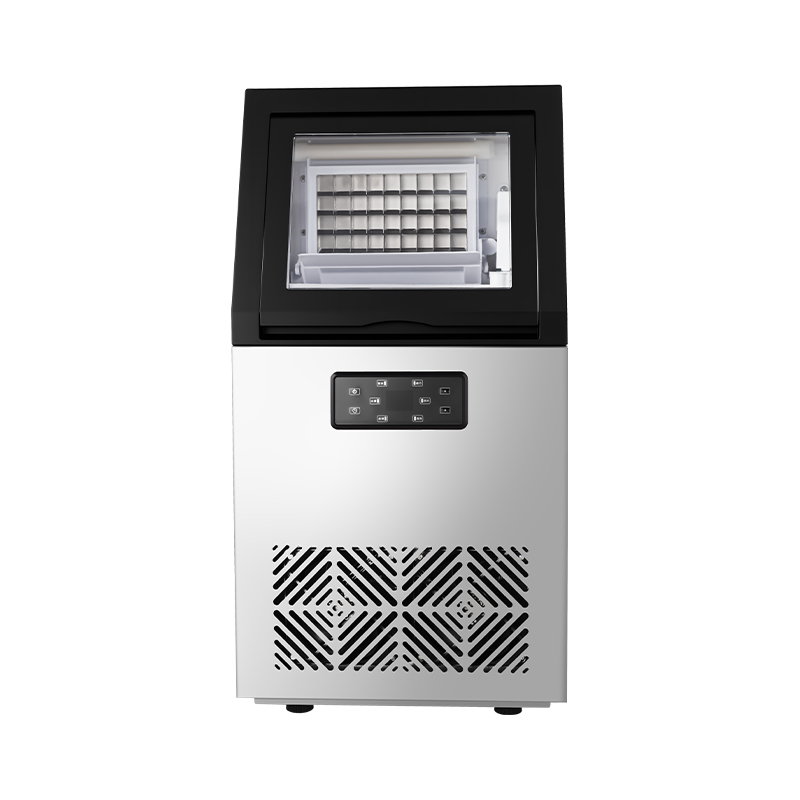 SMK-24F Full-Cube Undercounter Ice MakerCompact undercounter model with 24 kg daily output and 5 kg storage, suited to limited counter depth and busy evening service.View Product →
The Specs That Predict Whether You Will Be Happy
Once cube size and format are settled, five numbers decide day-to-day satisfaction. Read them in this order.
- Rated daily output, and the conditions behind it. Output figures are measured at defined room and water temperatures; in a 32 °C kitchen expect 15–25% less than the number on the label.
- Bin capacity against your peak hour. A machine that makes 50 kg a day but stores 10 kg will still run dry at eight in the evening. Storage, not production, is usually the bottleneck.
- Cycle time and harvest reliability. Most commercial cycles run 12–25 minutes depending on cube size; a short reference on how long it takes to make ice cubes helps you plan the first hour of service. A plumbed machine starting from warm needs 20–30 minutes before it is useful.
- Water quality and clarity. Hard water scales the evaporator and clouds the cube. A filter and a descaling schedule are part of the purchase, not an optional extra.
- Cleaning access, noise and heat. Air-cooled units run around 50–60 dB and dump heat into the room; front or top access for descaling saves hours over a year of ownership.
If two machines are close on paper, choose the one with the easier cleaning route. In our experience servicing commercial ice machines, scale and airflow cause more failures than compressors do.
Capacity Math Most Buyers Skip
Work backwards from the busiest hour rather than the average day. A 60-seat room serving 80 drinks between 19:00 and 21:00 at roughly 120 g of ice each needs about 10 kg in that window alone, plus a 20–30% buffer so staff are never digging into a half-empty bin.
Then apply the derating: size the machine at about 1.3× the calculated peak, and prefer two modules over one oversized unit when you expect growth. Modular designs make expansion cheap because the storage bin and the production section stay in place while you add capacity above or beside them — the SMK78F modular cube ice maker is built on that logic, with the same small-dice mould family used across our undercounter models.
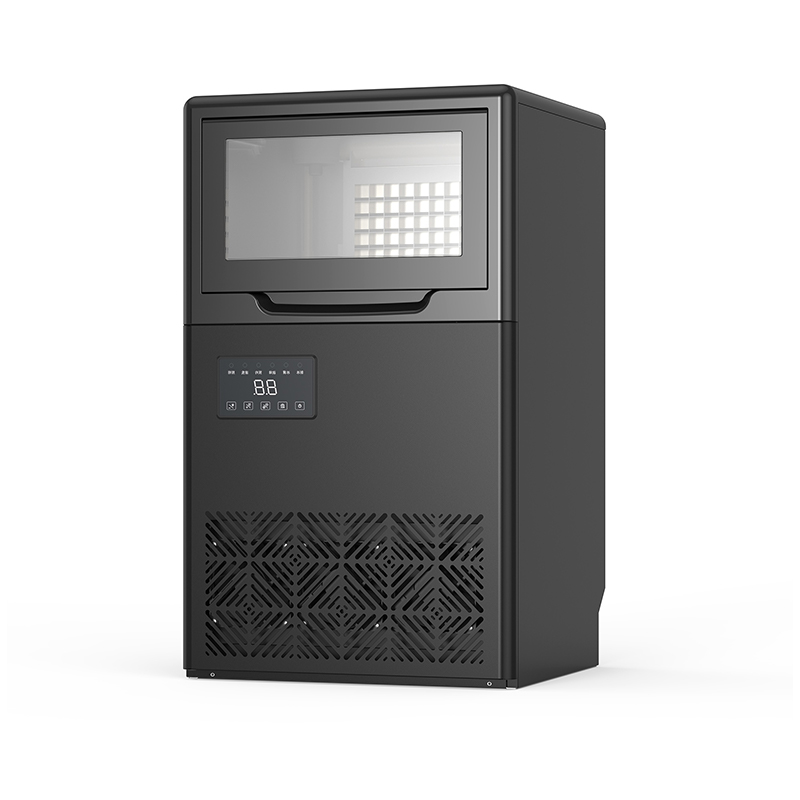 SMK-78F Modular Cube Ice MakerModular commercial unit producing up to 78 kg daily with 25 kg storage, designed for capacity expansion where peak demand may grow.View Product →
For Distributors and Private-Label Brands: What to Verify at the Factory
Covaiy is the ice-machine brand of Cixi Xiameng Electric Co., Ltd., which has been manufacturing water-related appliances in Zhejiang since 2003. The company runs R&D, production and service under one roof with a team of more than 260 people, releases at least 30 new models a year, and inspects every Covaiy machine before shipment so that performance and build quality stay consistent between orders.
When you source a little square ice cube maker under your own label, four items deserve written confirmation: the mould dimension and its tolerance; the voltage, frequency and refrigerant matched to the destination market; the packing standard, including drop-test requirements; and the spare-parts list for harvest-cycle components. It is also worth asking whether the cube style can be swapped on the same chassis — running half-dice and full-dice moulds on one platform cuts SKU risk and inventory cost considerably.
Built-in formats are where custom housing work earns its keep. OEM and ODM support typically covers logo, housing design, voltage adaptation and packaging, and a built-in unit such as the SMK36F is a sensible starting point when the machine has to disappear into joinery rather than sit on a counter.
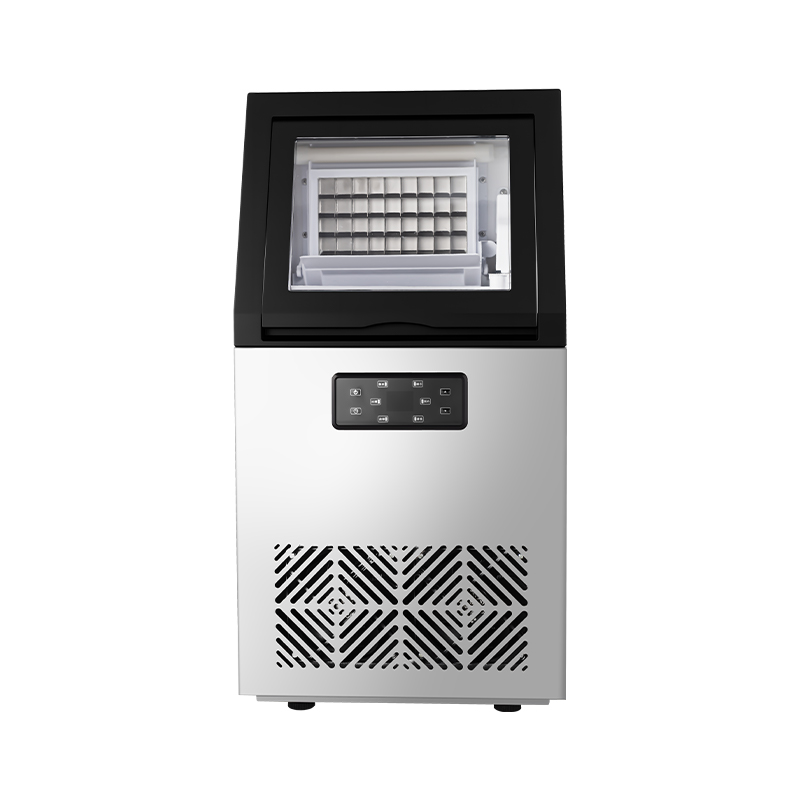 SMK-36F Built-in Cube Ice MakerBuilt-in commercial cube maker with integrated storage, automatic water intake or self-priming, suited to joinery housing and quick ice replenishment.View Product →
Putting the Decision in Order
Choose the cube dimension from the glassware and the drink style, choose the format from daily volume and plumbing, then size capacity at 1.3× your peak hour. A little square ice cube maker is a simple product, and the disappointing purchases are almost always the ones where those three questions were asked in the wrong order.
Related Product
-
-
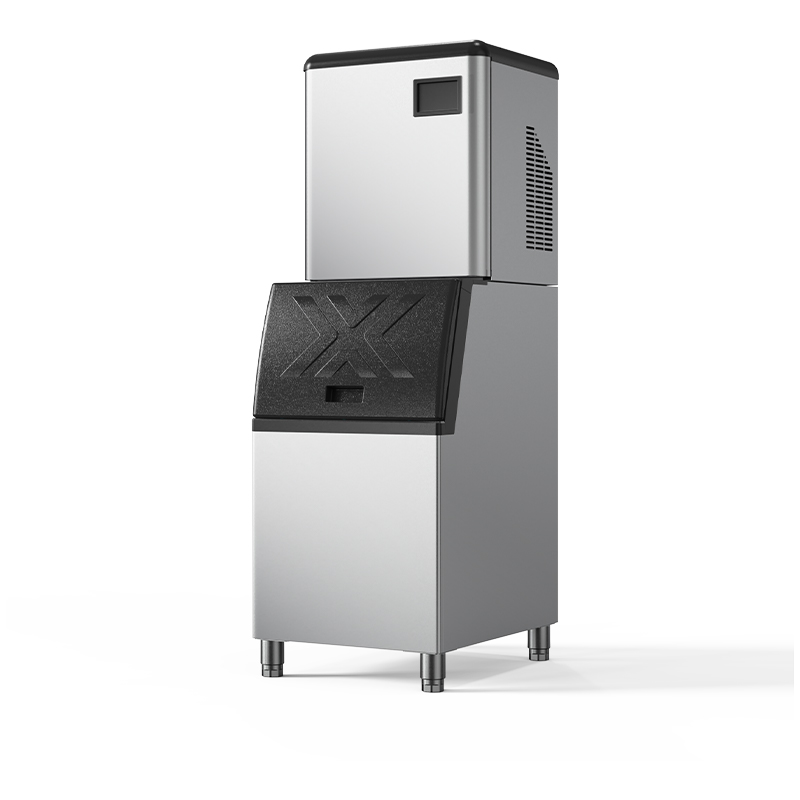
The SMK-182FRO Stainless Steel Cube Ice Maker is a split-system square ice maker specifically engine...
+ VIEW MORE -
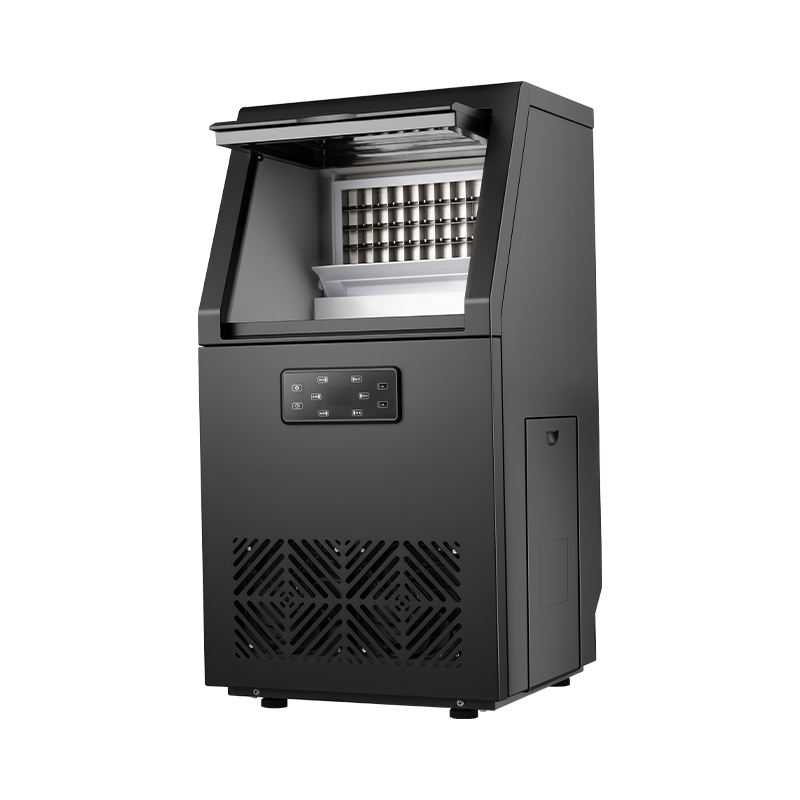
The SMK-36F Built-in Cube Ice Maker is a commercial-grade ice-making device specifically engineered ...
+ VIEW MORE -
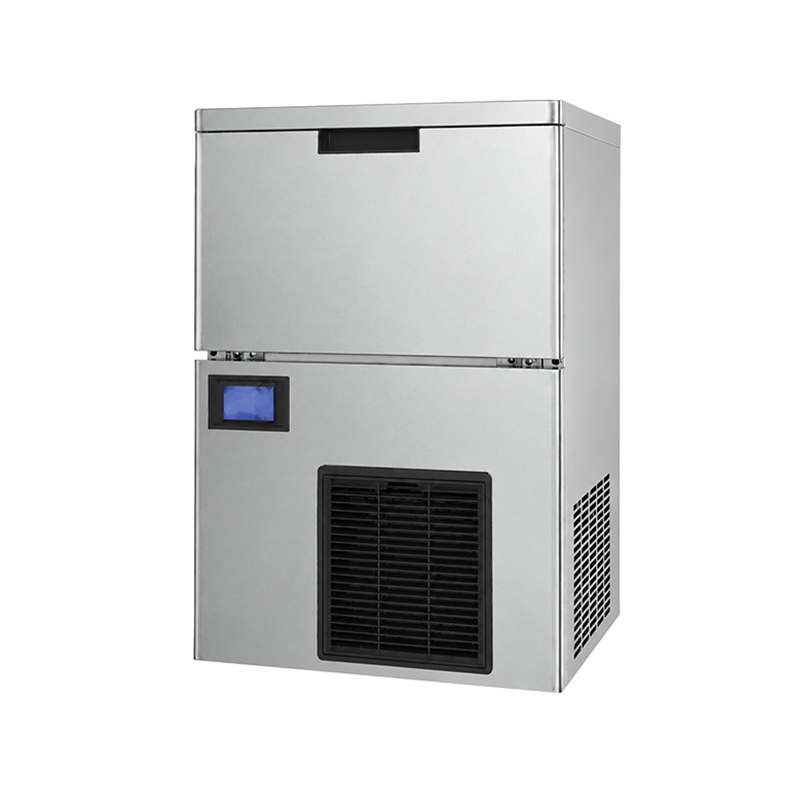
The Covaiy SMK-80F-35PF Gourmet Ice Machine is designed to produce high-quality big cube ice for com...
+ VIEW MORE -

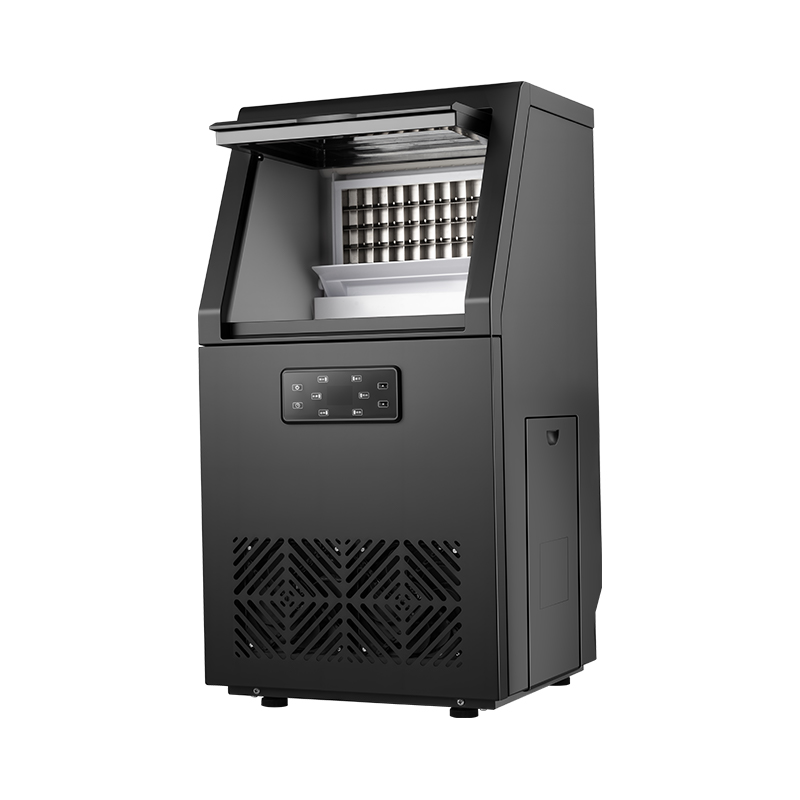
The SMK-78F Modular Cube Ice Maker is a fully automated device engineered specifically for high-effi...
+ VIEW MORE -
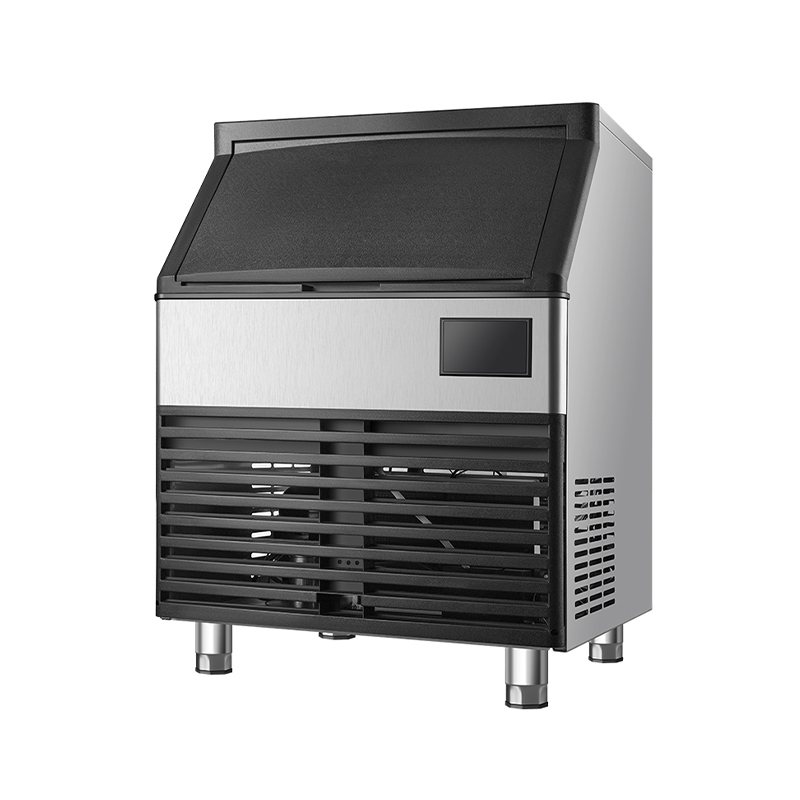
SMK-108F 108-Cube Ice Maker 108-Cube Ice Maker is designed to meet the daily ice-making needs of res...
+ VIEW MORE


Product Categories
Cube Ice Machine Flake Ice Machine Nugget Ice Machine Crescent Ice Machine Gourmet Ice Machine Ice DispenserContact
 info@covaiy.com
 +1 (618) 886-8178 /+16188868178
 No. 6 Wei'er Road, Xigong District, Xinpu Town, Cixi City, Zhejiang Province, China
Copyright © Cixi City Sharmoon Electric Co., Ltd. All Rights Reserved
Custom commercial ice machine outdoor Manufacturer
OEM/ODM commercial ice machine company
