

 English
 Español
The SMK-24F Full-Cube Undercounter Ice Maker is a fully automated ice-making unit meticulously desig...
+ VIEW MORE
 Industry News
HOME / News & Share / Industry News / What Water Makes Clear Ice Cubes: TDS, Hardness and Filtration Guide
What Water Makes Clear Ice Cubes: TDS, Hardness and Filtration Guide
Sharmoon appreciates your support and sincerely looks forward to cooperating with you for mutual development!
Content
- 1 What Kind of Water Makes Clear Ice Cubes: The Short Answer
- 2 Why Most Water Produces Cloudy Ice
- 3 Comparing Water Types for Clear Ice
- 4 Home Method: Turning Tap Water into Clear Ice
- 5 Commercial Ice Makers: Where Water Treatment Meets Machine Design
- 6 Reading the Cube: What Each Symptom Tells You
- 7 What to Check Before You Buy
Put two ice cubes side by side on a white countertop and the difference is immediate. One looks like cut glass; the other has a pale, foggy core that never clears. The cause is almost never the compressor or the freezing cycle — it is what came out of the tap.
What makes clear ice cubes is water that is low in dissolved minerals and dissolved gas, then frozen slowly and from one direction. Everything else — boiling, jug filters, reverse osmosis, slow-freeze trays — is simply a way of pushing the water closer to that state. Get the water right and most machines will turn out glass-clear cubes; get it wrong and even a well-built commercial unit will produce cloudy blocks all day long.
What Kind of Water Makes Clear Ice Cubes: The Short Answer
Aim for water with total dissolved solids (TDS) between 30 and 80 ppm, hardness below 50 mg/L, no residual chlorine, and as little dissolved air as possible. That is the working specification behind bar-quality clear ice, and it holds whether you are filling a silicone tray at home or specifying a 200 kg/day machine.
In practice, that means paying attention to five things:
- Start with low-mineral water. Reverse osmosis or distilled water removes the calcium and magnesium salts that scatter light inside a cube.
- Degas before freezing. Boiling and cooling drives off dissolved oxygen and nitrogen, which otherwise freeze in place as micro-bubbles.
- Filter for chlorine and organics. Chlorine does more than taint taste; combined with organic residue it leaves haze and odour in the ice bin.
- Keep the water moving. Circulating or spray water carries impurities away from the freezing surface instead of trapping them there.
- Freeze from one direction. Directional freezing pushes gas and salts into a single layer that can be removed.
Pure distilled water is not automatically the better choice. Water with almost no mineral content freezes into crystals that crack and shatter easily, which is why many bars blend RO water back to a modest TDS rather than chasing 0 ppm.
Why Most Water Produces Cloudy Ice
Ice goes cloudy for four reasons, and in a typical kitchen they appear together:
- Dissolved gases. Cold water cannot hold as much gas as warm water. As temperature falls, oxygen and nitrogen come out of solution as micro-bubbles and freeze in place, scattering light exactly like fog.
- Dissolved mineral salts. Calcium and magnesium interfere with the crystal lattice. As the ice front moves inward, salts are pushed ahead of it and concentrate in the centre, creating the white core.
- Organic matter and fine particles. Even small amounts of sediment or organic residue get locked into the outer shell and act as scattering points.
- Freezing speed. Fast freezing traps bubbles before they can escape. Slow, controlled freezing gives them time to migrate.
This is also why a single cube can be glassy at the edges and opaque in the middle. The clear outer ring is water that froze first and cleanest; the core is everything the ice front pushed inward.
Comparing Water Types for Clear Ice
Not every source needs the same amount of treatment. The table below shows what each common option typically delivers — treat the figures as ranges rather than fixed numbers, because municipal supplies shift with season and region.
| Water source | Typical TDS | Ice clarity | Best use |
|---|---|---|---|
| Tap water | 120–400 ppm | Cloudy, white centre | Needs filtration before use |
| Filtered tap (carbon + 5 µm) | 80–250 ppm | Improved, still hazy | Light commercial, low maintenance |
| Bottled mineral or spring water | 150–600 ppm | Heavily cloudy | Not recommended |
| Reverse osmosis | 10–50 ppm | Clear, slight cracking | Commercial and home production |
| Distilled | ~1 ppm | Clearest, brittle | Small-batch bars |
| Boiled and cooled tap water | Unchanged | Better after degassing | Free home upgrade |
Home Method: Turning Tap Water into Clear Ice
If you are working with a home freezer and a standard tray, this sequence is the most reliable one available without new equipment:
- Filter first. Run the water through a carbon jug filter or a small under-sink RO unit to strip chlorine and organics before anything else.
- Boil and cool. Bring the water to a boil, then let it cool completely before filling the tray. The heating step removes a large share of dissolved gas.
- Insulate one side. Place the tray inside a small cooler or wrap it in a towel so freezing happens mainly from the top down — the principle behind directional freezing for clear ice cubes.
- Cut away the cloudy base. The bottom layer ends up holding most of the impurities. Saw it off and keep the clear block above it.
- Add flavour after freezing. Syrups, fruit and botanicals all count as impurities and will cloud a cube if they go into the water.
Commercial Ice Makers: Where Water Treatment Meets Machine Design
In a commercial kitchen the water specification usually looks like this: a 5 µm sediment pre-filter, an activated carbon block, a softener bringing hardness under 50 mg/L, and reverse osmosis wherever the local supply sits above 200 ppm TDS. Skip any stage and the saving reappears later as scale on the evaporator, longer cycle times and a bin of cloudy ice.
Machine design matters just as much. Spray and waterfall evaporators circulate water continuously over chilled moulds, so bubbles and dissolved solids are carried away from the freezing surface instead of being locked in. That is the same directional-freezing idea a home cooler box imitates, running automatically on every cycle.
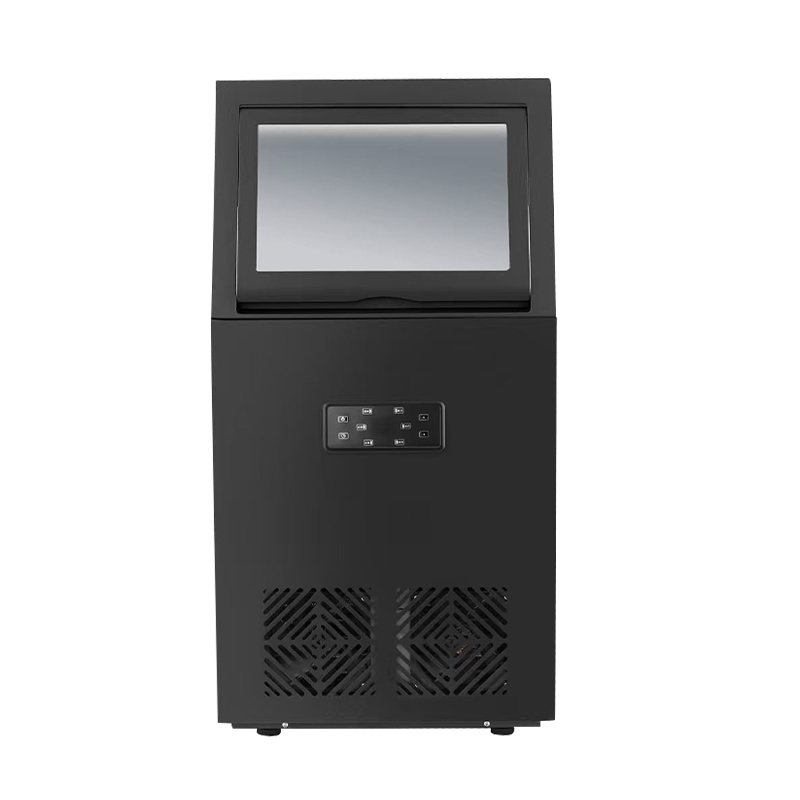 SMK-24P Spray Crystal Ice Maker for Clear CubesProduces glass-clear, high-density ice via spray freezing for spirits and presentation serves; adjustable thickness and commercial capacity suit premium bars and cafés.View Product →
Covaiy builds both approaches for B2B buyers. The SMK24P spray crystal ice maker runs a continuous spray cycle to produce glass-clear cubes for spirits and presentation serves, while the SMK35P spray cubic ice machine applies the same principle to a standard square cube for high-turnover bars.
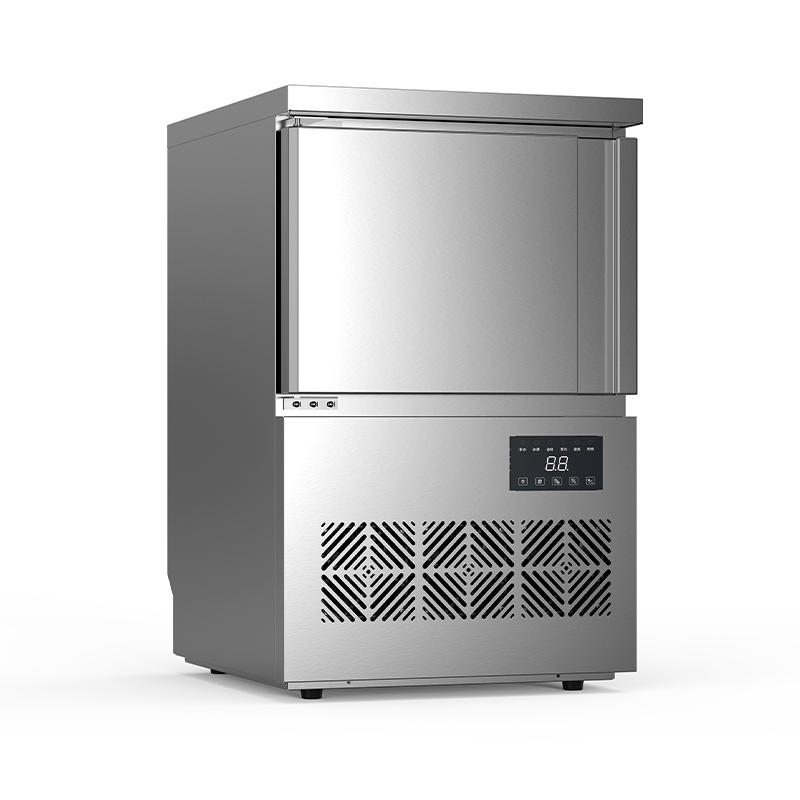 SMK-35P Spray Cubic Ice Machine for High-Turnover BarsApplies spray freezing to standard square cubes, offering clear, hard, slow-melting ice with adjustable thickness for bars needing steady output.View Product →
Where the priority shifts from crystal clarity to sustained volume, a heavy-duty unit such as the SMK45F keeps output steady across long shifts — provided the incoming water is treated to the same specification.
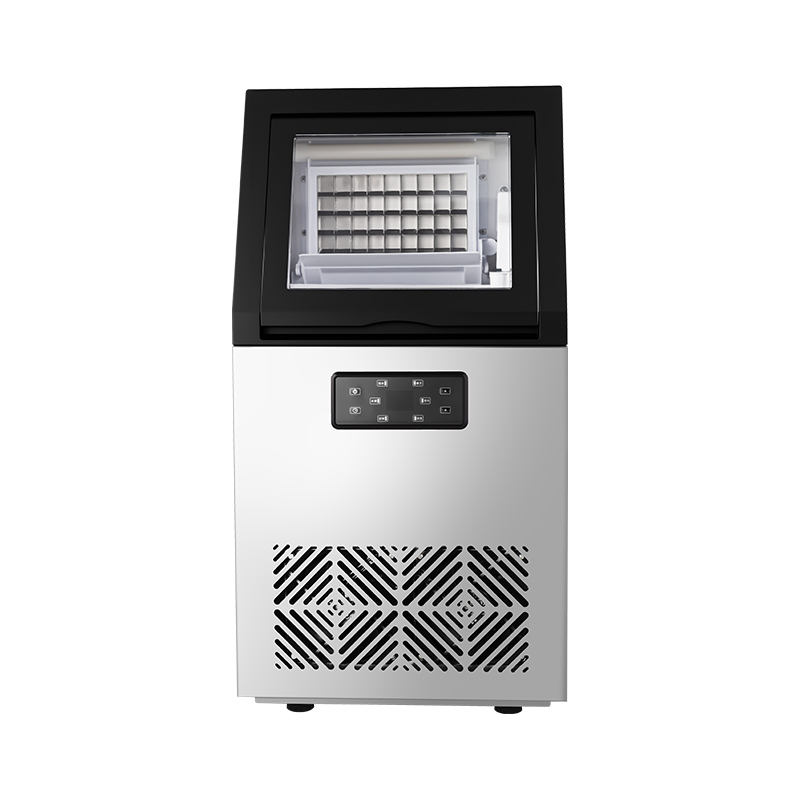 SMK-45F Heavy-Duty Cube Ice Maker for Sustained VolumeIntegrated 45 kg/day cube maker with storage and R290 compressor, designed for continuous supply during peak hours in bars, cafés, and hospitality venues.View Product →
Water quality and machine quality are not separate purchasing decisions. A spray evaporator only delivers clear ice when the feed water is low in hardness, and a well-maintained RO system cannot rescue a freezing cycle that is simply too fast.
Reading the Cube: What Each Symptom Tells You
When clear ice stops being clear, the appearance of the cube usually points to the cause faster than a water test does.
- White, concentrated core. Dissolved salts are being pushed to the centre. Service the RO membrane and confirm the softener is regenerating on schedule.
- Uniform haze with visible bubbles. Dissolved gas. Pre-chill the incoming water, check the filter is not bypassing, and confirm the machine is not short-cycling.
- Chalky film on the evaporator. Hardness. The softener is undersized or exhausted, and scale is now acting as insulation that slows freezing and wastes energy.
- Off-taste and odour. Chlorine or organics passing the carbon stage. Replace the cartridge on throughput, not on calendar date alone.
- Cubes that crack in the glass. Water that is too pure, or a cube frozen too quickly. A little mineral content and a slower cycle reduce breakage.
What to Check Before You Buy
For anyone specifying equipment rather than a single tray, the water side deserves as much attention as the daily output figure.
- Confirm the feed-water target the manufacturer expects in ppm TDS and hardness, then budget for the filtration needed to reach it.
- Ask whether the evaporator is spray, waterfall or gravity-fed, and how easily it can be descaled in routine service.
- Match the ice type to the serve: crystal cubes for spirits, standard cubes for volume, gourmet shapes where presentation sells the drink.
- For OEM and private-label programmes, confirm voltage options, housing design and packaging support at the quotation stage.
- Ask what inspection each unit receives before it leaves the factory.
Covaiy manufactures commercial and portable ice makers in Zhejiang, China, and ships to B2B customers worldwide. The Covaiy background and manufacturing base covers both OEM/ODM programmes and the branded range, with every unit inspected before dispatch.
The practical takeaway is simple. Clear ice is a water problem before it is an equipment problem — treat the water, slow the freeze, and the cube in the glass will look the way it should.
Related Product
-
-
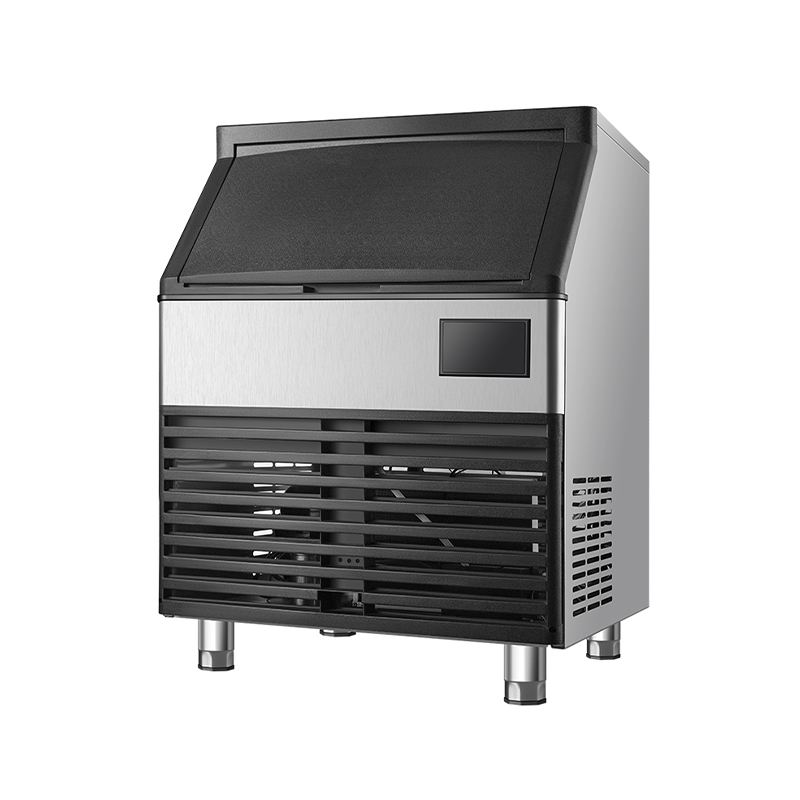
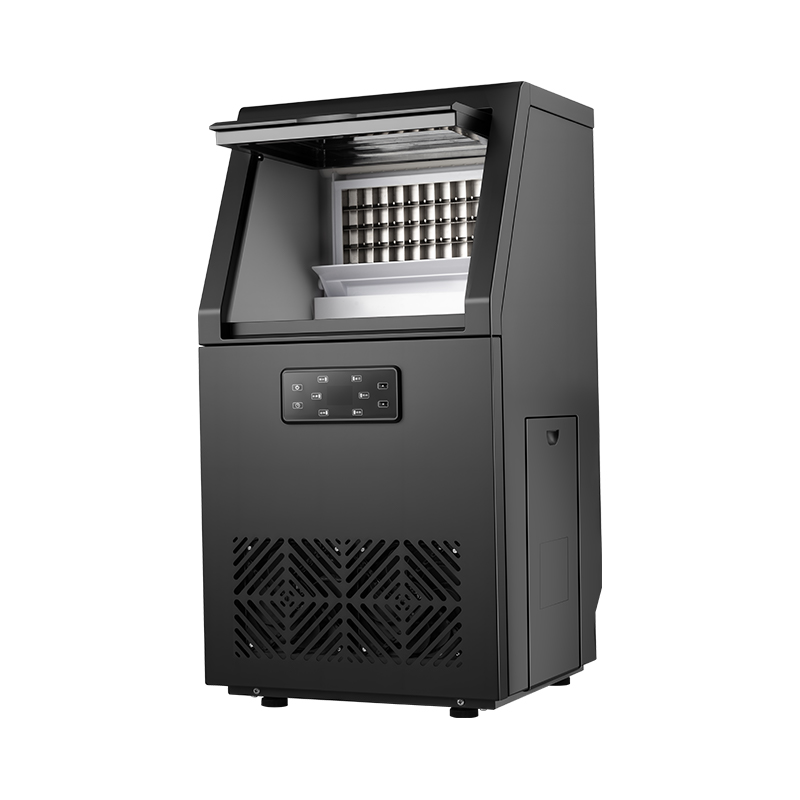
The Covaiy SMK-80Y Crescent Ice Machine is a reliable and efficient commercial ice-making solution d...
+ VIEW MORE -
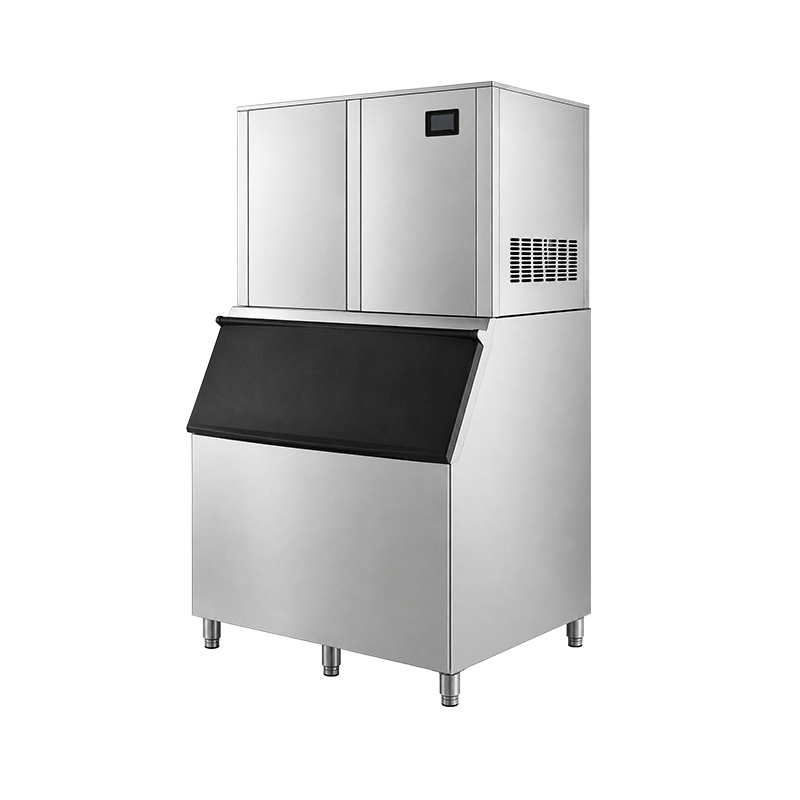
SMK-798F 900kg Industrial Ice Maker 900kg Industrial Ice Maker is designed for businesses that requi...
+ VIEW MORE -
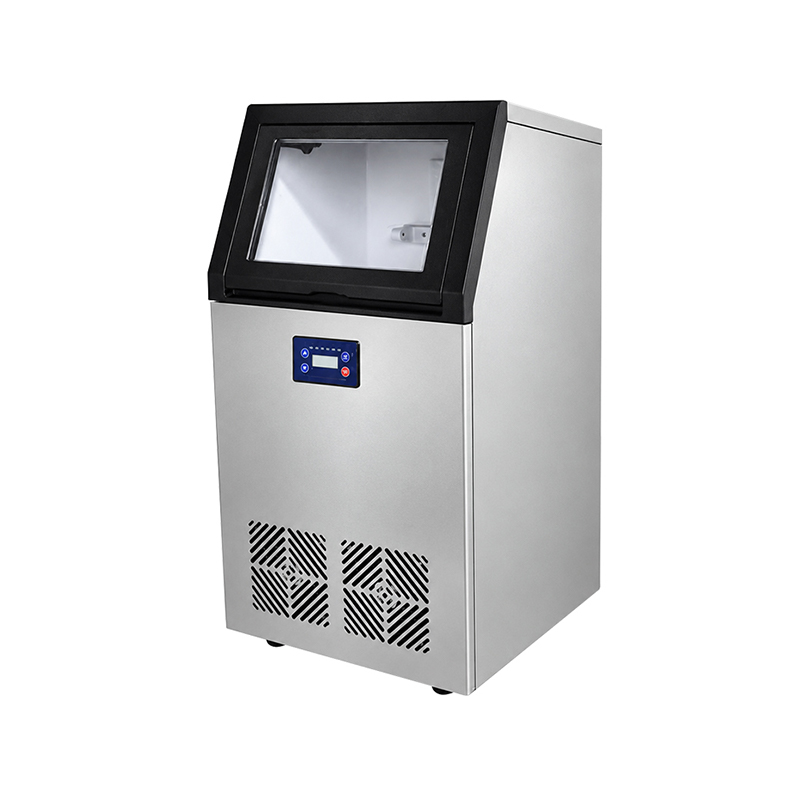
The COVAIY SMK-78J Nugget Ice Machine is a compact and efficient commercial ice maker designed to pr...
+ VIEW MORE -
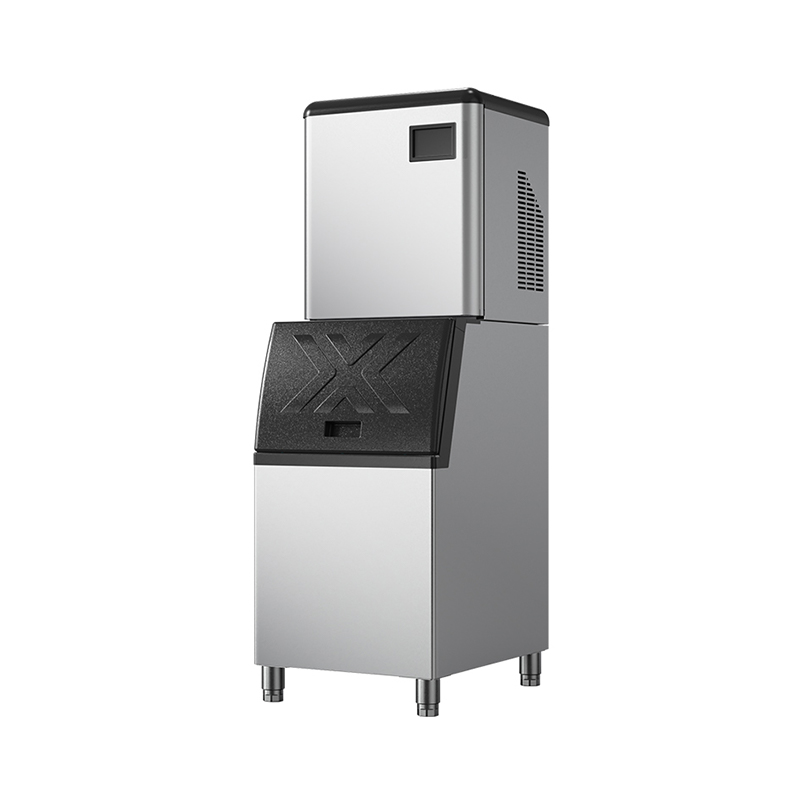
The COVAIY SMK-150J Commercial Nugget Ice Machine is designed to provide reliable and efficient ice ...
+ VIEW MORE -
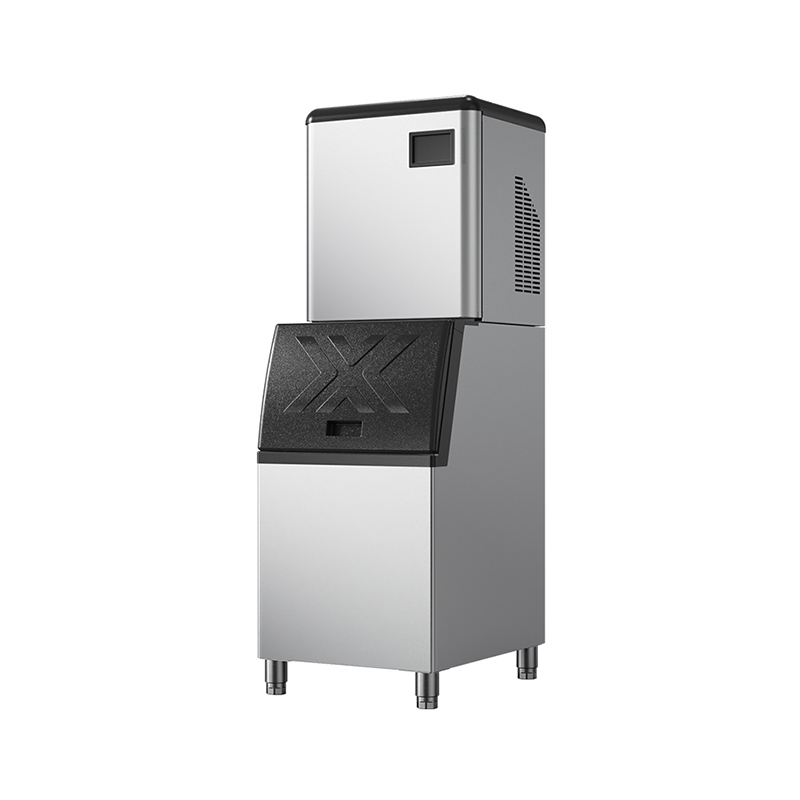
The COVAIY SMK-200J Commercial Nugget Ice Machine is designed to provide a reliable and efficient ic...
+ VIEW MORE


Product Categories
Cube Ice Machine Flake Ice Machine Nugget Ice Machine Crescent Ice Machine Gourmet Ice Machine Ice DispenserContact
 info@covaiy.com
 +1 (618) 886-8178 /+16188868178
 No. 6 Wei'er Road, Xigong District, Xinpu Town, Cixi City, Zhejiang Province, China
Copyright © Cixi City Sharmoon Electric Co., Ltd. All Rights Reserved
Custom commercial ice machine outdoor Manufacturer
OEM/ODM commercial ice machine company
