

 English
 Español
SMK-156F for High-Capacity Cube Ice Maker— A Commercial Flagship and Production Powerhouse
+ VIEW MORE
 Industry News
HOME / News & Share / Industry News / 110 Auto Commercial Ice Cube Maker Buying Guide: Capacity, Power and Spec Checks
110 Auto Commercial Ice Cube Maker Buying Guide: Capacity, Power and Spec Checks
Sharmoon appreciates your support and sincerely looks forward to cooperating with you for mutual development!
Content
A bar operator in Dubai recently sent Covaiy a single line: “quote for 110 auto commercial ice cube maker.” Before any price could be quoted, three things had to be settled — what the 110 actually refers to, how hot the room gets in July, and what the power supply looks like. That is the short version of this article: in most listings of this class, 110 describes daily output, roughly 110 lb (about 50 kg) of cube ice per 24 hours, while the machine itself runs on a 110V/60Hz single-phase supply. Get either detail wrong and you end up with a unit that is undersized during peak service, or one sitting in a crate waiting for a transformer.
Below is how to read the number, check it against real demand, and decide which details are worth locking down before a purchase order is raised.
What Does “110” Refer To on an Automatic Cube Ice Maker?
Three readings appear in the market, and only the first two are useful for a buying decision.
- Output tier. 110 lb (about 50 kg) of cube ice per 24 hours, normally quoted at 70°F air and 50°F inlet water. This is the figure to compare across suppliers.
- Electrical standard. 110–120V, 60Hz, single phase, usually on a dedicated 15A circuit. Standard in North America and in several Gulf and Latin American markets.
- Catalogue prefix. Some factories build 110 into a model family name. Treat that as a label rather than a specification and read the kg/24h figure on the datasheet instead.
“Auto” deserves the same scrutiny. On a genuine commercial cube machine it should mean automatic ice harvest, bin-full shutoff, water-level control and an error-code display. A machine that only automates the freezing cycle but needs a manual defrost every week is a different product, and that difference usually explains the price gap — not the stainless steel.
Ask for rated output at the ambient and water temperatures your site actually sees. A 110 lb machine tested at 70°F air may deliver 90–95 lb in a 90°F kitchen with warm inlet water, which is enough of a shortfall to matter on a Friday night.
Matching 110 lb a Day to Real Peak Demand
Ice demand is spiky, not flat. A 60-seat restaurant might use 80 lb across the day, but half of it lands between 12:00 and 14:00. Two numbers therefore matter together: total daily output and usable bin capacity.
| Operation | Typical Use | Daily Need | Suggested Rated Output |
|---|---|---|---|
| Coffee shop / QSR | 0.5–0.75 lb per drink | 60–90 lb | 110 lb |
| Casual restaurant, 60 seats | 1.25–1.5 lb per seat | 75–95 lb | 110–150 lb |
| Cocktail bar, 40 covers | 3 lb per cover plus shaking loss | 120–160 lb | 160–230 lb |
| Hotel breakfast buffet | 0.5 lb per cover in three hours | 80–120 lb | 150 lb with 30 lb+ bin |
| Seafood display counter | Continuous use plus melt loss | 100–150 lb | 150–200 lb, water-cooled |
Bin capacity is where many 110 lb installations quietly fail. A machine producing 110 lb a day with a 20 lb storage bin cannot carry a two-hour brunch service that pulls 40 lb; the bin empties and then refills at one harvest every 12–18 minutes. Specify storage of at least a third of daily output — 35–40 lb in this class — or move up to a modular head with a separate remote bin.
Air-Cooled, Water-Cooled or Modular: Where the Machine Will Live
Most 110 lb units are air-cooled undercounter or freestanding cabinets, but the room decides the configuration more than the capacity figure does.
Air-cooled: simplest install, most sensitive to the room
Air-cooled is the default for undercounter work because it needs no extra water line for heat rejection. It does need 10–15 cm of clearance around the vents and real airflow. In a closed 35°C kitchen the condenser struggles, output drops and the compressor runs longer, which shows up as wetter ice and shorter component life rather than an obvious failure.
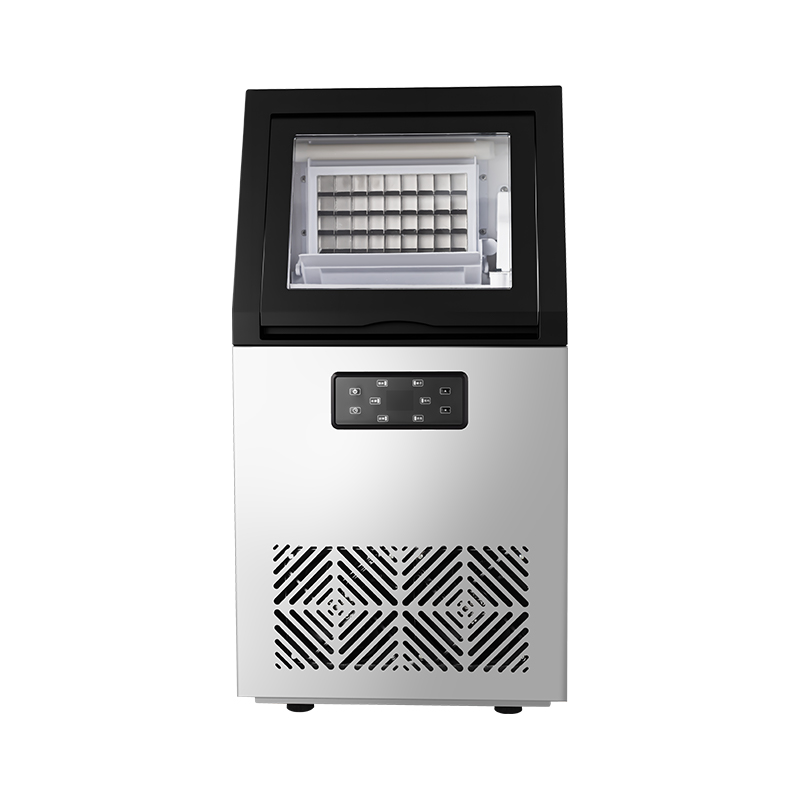 SMK-50F Air-Cooled Undercounter Commercial Ice MakerCompact, air-cooled cube maker with integrated bin and R290 refrigerant, suited to undercounter installs where clearance and airflow are planned.View Product →
Water-cooled: steadier output in hot rooms
Water-cooled condensers dump heat into drain water, so output holds up in small, hot kitchens and behind seafood counters. The trade-offs are higher water consumption and a drain that must genuinely work — a slow drain backs up a water-cooled machine faster than an air-cooled one.
Modular: head-only units for growth and tight doorways
A modular head sits on a separate bin or dispenser. It scales by adding heads rather than replacing cabinets, and it moves through narrow service corridors that a full cabinet cannot. For operators expecting to add covers within two years, the modular route is usually cheaper than replacing a complete 110 lb unit.
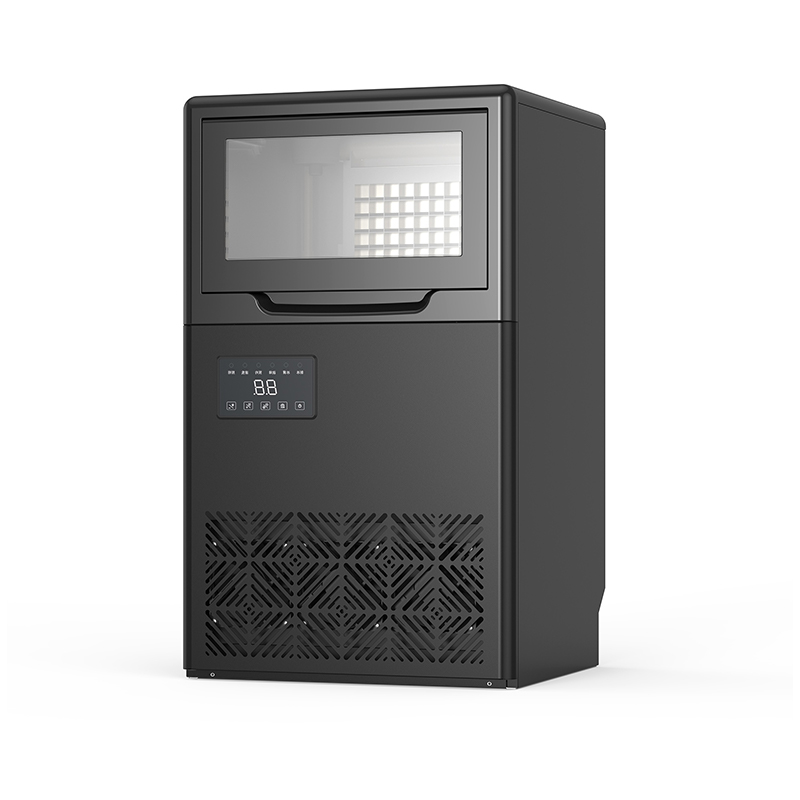 SMK-78F Modular Cube Ice Maker for Scalable OutputHigh-output modular cube machine with 78 kg daily capacity and 25 kg storage; relevant where production may need to scale.View Product →
Cube Size, Clarity and Cycle Time
Cube geometry affects pour cost as much as capacity does. A standard full cube measures roughly 22–28 mm and weighs about 28 g; half cubes chill faster and suit soft drinks and bottle service; larger slow-melt cubes suit whisky and premium spirits. Bars that serve both usually run a full-cube machine and buy in specialty ice rather than compromising the primary supply.
Clarity comes from water quality and freeze method, not from a bigger compressor. Spray systems and directional freezing push air and dissolved minerals out of the cube, but filtration, regular descaling and a clean evaporator do more for a clear cube than any single feature. Cloudy centres almost always trace back to scale on the evaporator or an exhausted filter.
Cycle time sets rush-hour capacity. In the 110 lb class a harvest completes every 12–20 minutes depending on cube size and ambient temperature, which is roughly two harvests an hour for planning purposes. If the ice comes out wet and clumps in the bin, the freeze cycle is being cut short or the bin is running warm — both are specification or installation issues, not bad luck.
Six Checks Before You Compare Prices
- Rated output with the test conditions attached, plus refrigerant type and charge.
- Electrical detail: volts, hertz, phase, plug type and fuse rating, and whether the control board is fixed-voltage or dual-voltage.
- Bin volume and insulation, and whether the bin is included in the quoted shipping volume.
- Footprint, door swing, service access and condenser clearance for the actual install position.
- Water inlet, filtration, drain diameter and slope — a machine without a proper drain becomes a warranty claim.
- Documentation and spares: certification marks for the destination market, availability of evaporator, PCB and fan motor, and what the pre-shipment inspection record covers.
Voltage, Customisation and Sourcing Through Covaiy
Covaiy is the registered brand of Cixi Xiameng Electric, a manufacturer based in Cixi, Zhejiang, founded in 2003 with more than 260 employees. The company builds commercial cube machines in both 110V/60Hz and 220–240V/50Hz configurations, alongside OEM/ODM work covering logo, housing design, voltage adaptation and packaging. Every Covaiy ice machine is inspected before shipment, and the cube ice machine range covers undercounter, built-in, modular and heavy-duty formats, so a project can be matched to a platform rather than forced into one cabinet size.
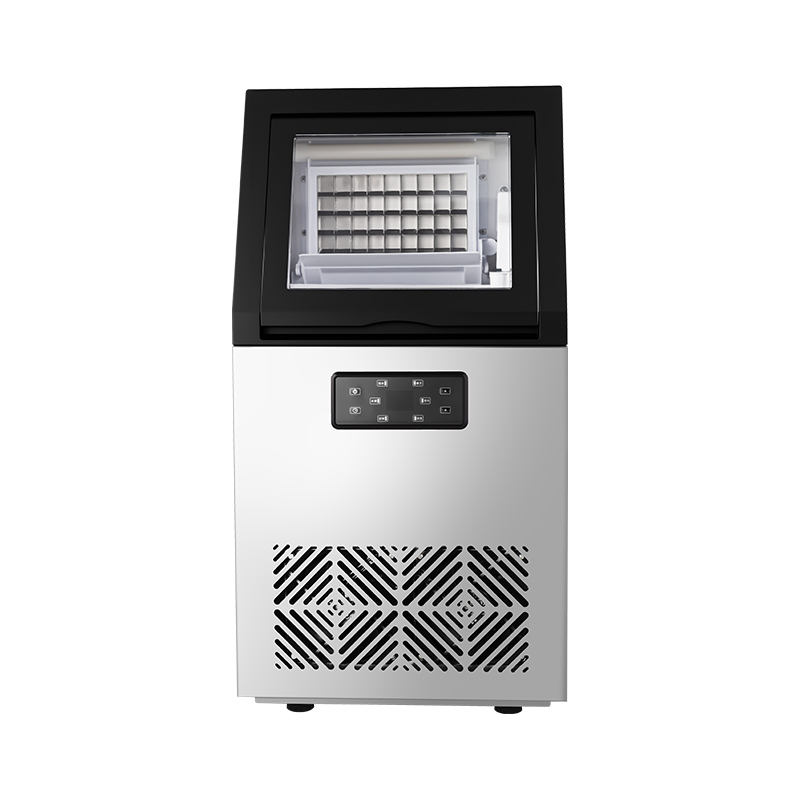 SMK-45F Heavy-Duty Cube Ice Maker for Peak DemandHeavy-duty 45 kg/day cube maker with 13 kg bin, R290 refrigerant and optional RO filtration; useful for peak-demand bar or café enquiries.View Product →
For a 110 lb project, send six answers with the enquiry: site ambient temperature, daily and peak-hour ice demand, supply voltage and plug type, required bin size, preferred cube size and the certification needed for the destination market. Those details turn a quotation into a specification, and they surface derating or drainage problems while they are still cheap to fix.
The number 110 is a starting point, not a specification. Confirm the output under your own room conditions, confirm the supply voltage and circuit, then size the bin against peak service rather than the daily average. Operators who do those three things get a machine that keeps up on the busiest shift; operators who buy on the headline figure usually end up buying twice.
Related Product
-
-
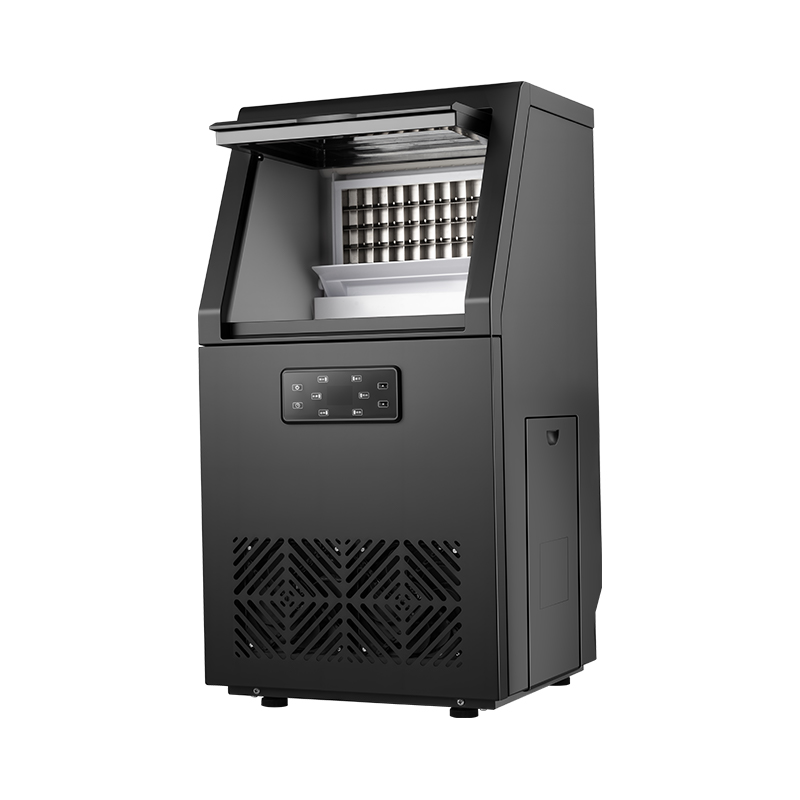
The SMK-24F Full-Cube Undercounter Ice Maker is a fully automated ice-making unit meticulously desig...
+ VIEW MORE -
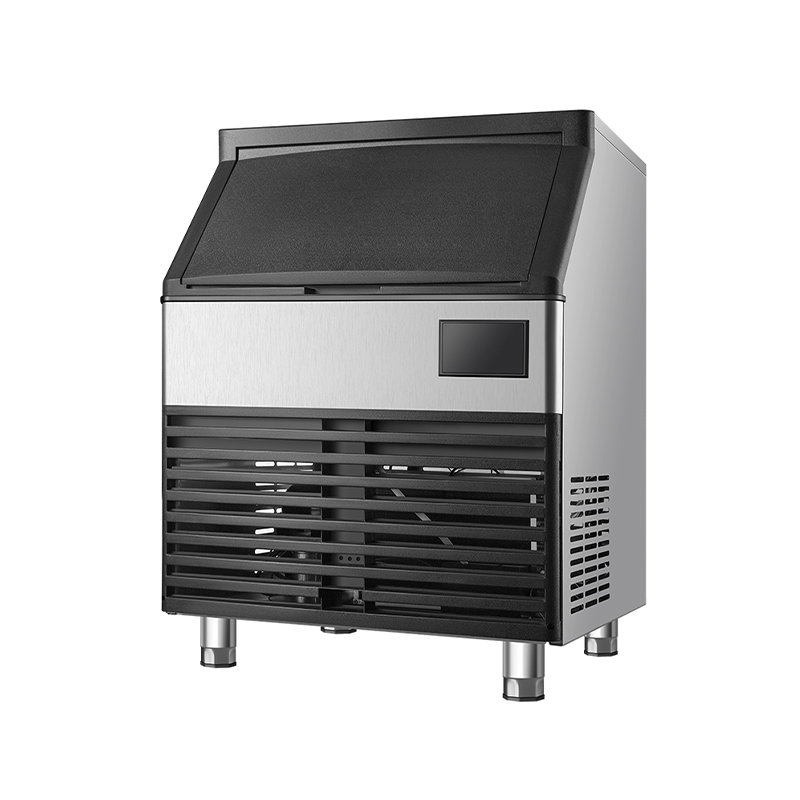
SMK-90F Compact Commercial Ice Maker is designed to provide a reliable and convenient ice-making sol...
+ VIEW MORE -
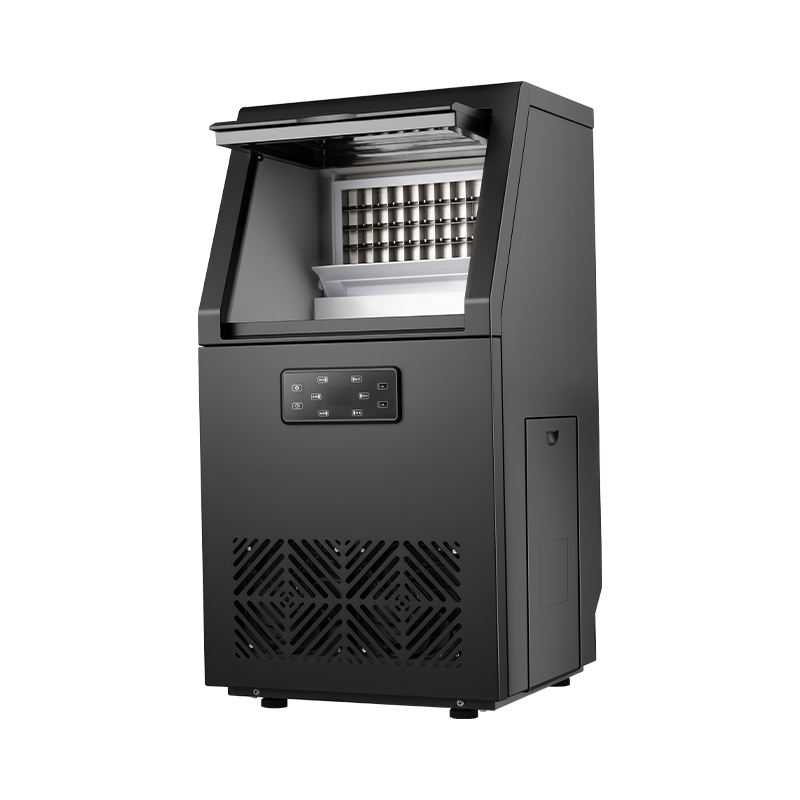
The SMK-36F Built-in Cube Ice Maker is a commercial-grade ice-making device specifically engineered ...
+ VIEW MORE -
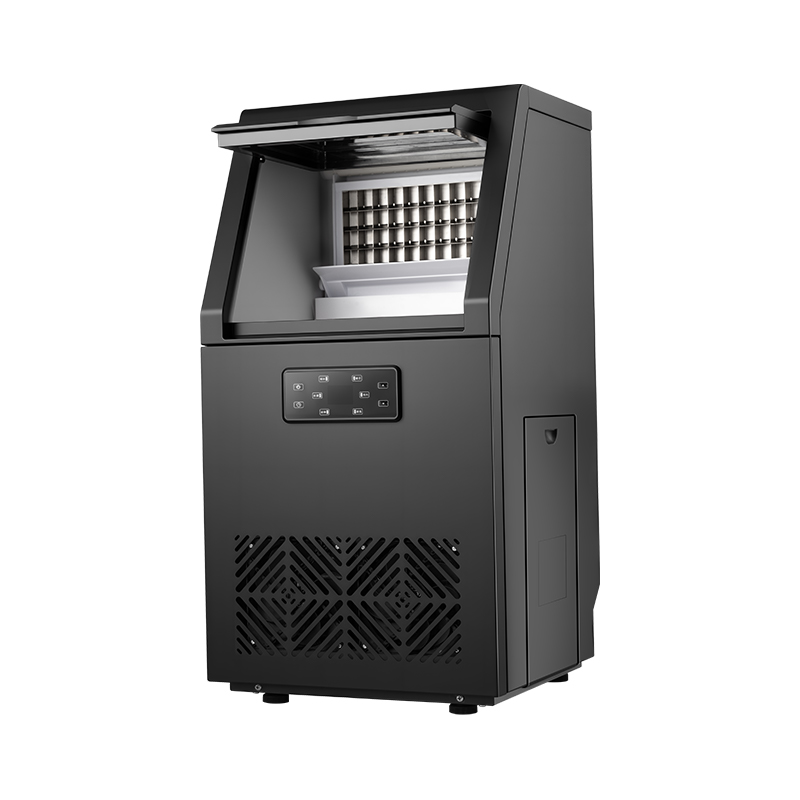
The SMK-32F Smart Integrated Commercial Ice Maker is a highly efficient ice-making device specifical...
+ VIEW MORE -
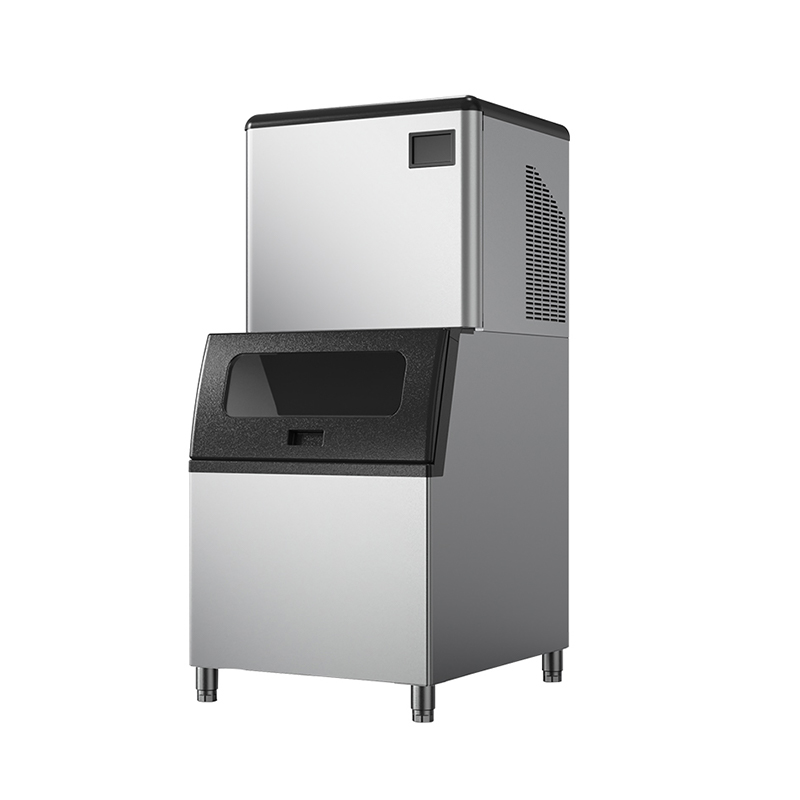
SMK-399F 400kg Commercial Ice Maker 400kg Commercial Ice Maker is designed for businesses that requi...
+ VIEW MORE


Product Categories
Cube Ice Machine Flake Ice Machine Nugget Ice Machine Crescent Ice Machine Gourmet Ice Machine Ice DispenserContact
 info@covaiy.com
 +1 (618) 886-8178 /+16188868178
 No. 6 Wei'er Road, Xigong District, Xinpu Town, Cixi City, Zhejiang Province, China
Copyright © Cixi City Sharmoon Electric Co., Ltd. All Rights Reserved
Custom commercial ice machine outdoor Manufacturer
OEM/ODM commercial ice machine company
